Right to Information Wiki Blog

Quick Reply: RTI Wiki blog — analysis, case-law summaries, and citizen guides on Right to Information Act 2005.
Latest RTI decision notes
- National Statistics Day 2026: How Government Data Affects Your Ration, Pension, Salary, Hospital, School and RTI Rights – citizen guide to administrative data, daily public services, RTI questions and the difference from UN World Statistics Day.
- Right to Be Forgotten: erase old court cases from Google after Delhi HC's 2026 ruling - what the Laksh Vir Singh Yadav judgment (2026:DHC:4891) means, the three remedies (de-indexing, delinking, masking), who is eligible vs barred, and how to apply.
- Gold Rate Today in India: 24K, 22K, 18K Price and Buyer Checklist — SEO-focused gold price guide with current-rate snapshot, city buying checklist, jewellery bill calculation, hallmark checks and a light RTI route for complaint records.
- PAN Aadhaar name mismatch? Fix KYC rejections without running office to office — high-search digital identity repair map covering PAN-Aadhaar, DigiLocker, mutual fund KYC, passport holds, bank onboarding and when RTI can actually help.
- Monday Morning RTI Checklist: Fix Pending Government Work This Week — Monday action plan for pending passport, pension, ration card, FIR, PMAY, electricity, scholarship, mutation and public-service files.
- PMAY status stuck or subsidy delayed? Use RTI after this checklist — high-interest PMAY 2026 guide covering stuck beneficiary status, missing names, delayed instalments, subsidy confusion, grievance steps and record-based RTI drafting.
- BCCI outside RTI: CIC decision in Geeta Rani case explained — legal analysis of CIC/MOYAS/A/2018/123236 after the Madras High Court remand, including Section 2(h), government control, substantial financing, tax concessions and practical RTI routes.
Blog
Quick Reply: Blog — analysis, case-law summaries, and citizen guides on the Right to Information Act 2005.
Editorial notes on legislative changes, major judgments, Commission orders, and practitioner issues under the Right to Information Act, 2005. Posts are published as matters are notified and reviewed periodically.
Start here
What this blog tracks: legislative changes, judgments, Commission orders, practitioner notes, and the working status of Information Commissions.
Recent posts

8 September 2026
₹1,000 for Your Answer Sheet? RTI Fee Rules
Check the central fee rules, read the CIC decision, and use a first appeal draft to challenge the charge. Includes a printable checklist.

5 September 2026. Big Helpers app campaign.
Tired of Waiting? Dream of a Better India in 2047
Imagine clear updates, helpful offices and services that respect your time. Create a Dream Card with the free INDIA 2047 iOS app and share your vision.

29 August 2026
Nepal Floods 2026: Cause and India Risk — citizen guide 2026
What likely caused the Rasuwa flash flood, how the river system connects to the Gandak, official help numbers, live alerts and simple safety steps.

29 June 2026
National Doctors Day 2026: Doctors, Rights and Public Health
A fact-checked citizen guide to 1 July Doctors' Day, Dr B C Roy, patient rights, public hospitals, health schemes and RTI accountability.
29 June 2026
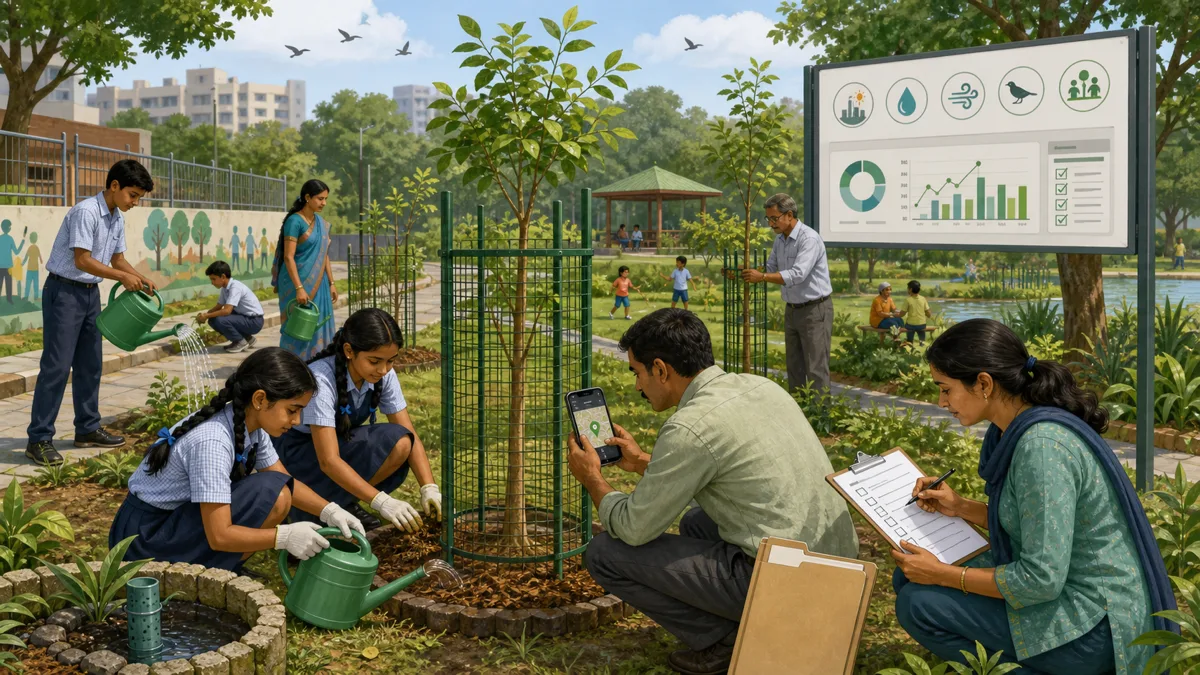
Van Mahotsav Week 2026: Why Planting One Tree Matters
A fact-checked citizen guide to 1-7 July Van Mahotsav, tree survival, heat, water, air quality, local governance and RTI monitoring.

29 June 2026
Cyber Jaagrookta Diwas 2026: Cyber Safety for Indians
Protect UPI, Aadhaar, mobile, senior citizens, children and family from OTP fraud, fake KYC links, digital arrest scams and online financial fraud.

14 June 2026
Blood Donation in India: Who Can Donate and What to Expect
Who can donate, what actually happens during donation, the common myths, and where to give on World Blood Donor Day.
14 June 2026
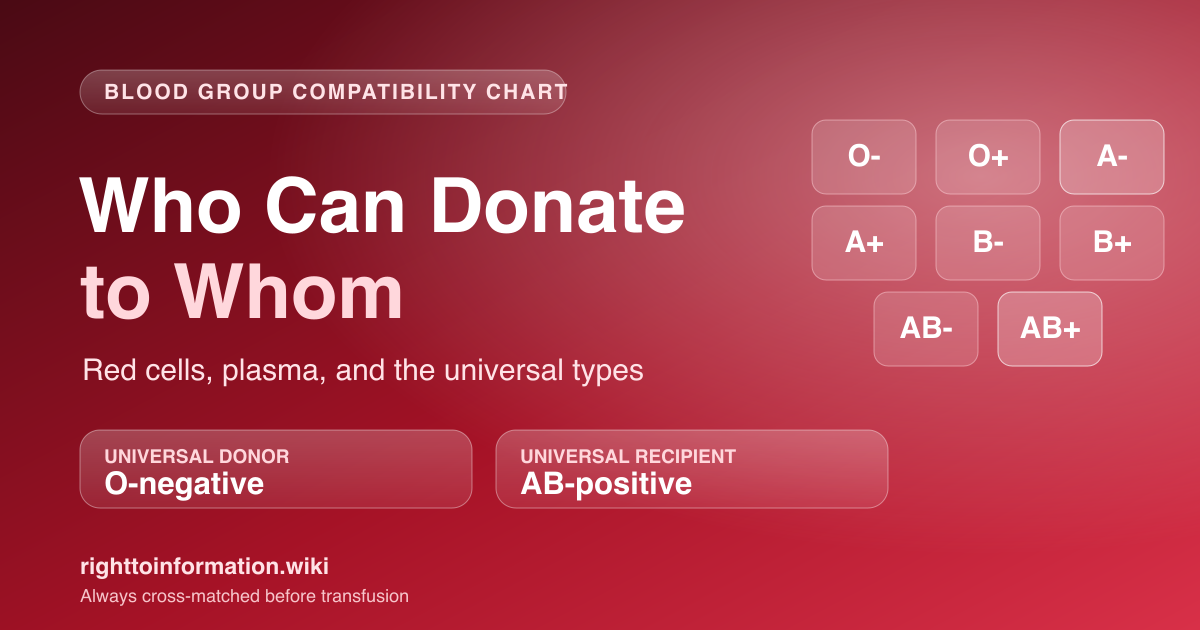
Blood Group Compatibility: Who Can Donate to Whom
The full red-cell and plasma chart, the universal donor and recipient, and why O-negative and AB matter.
13 June 2026
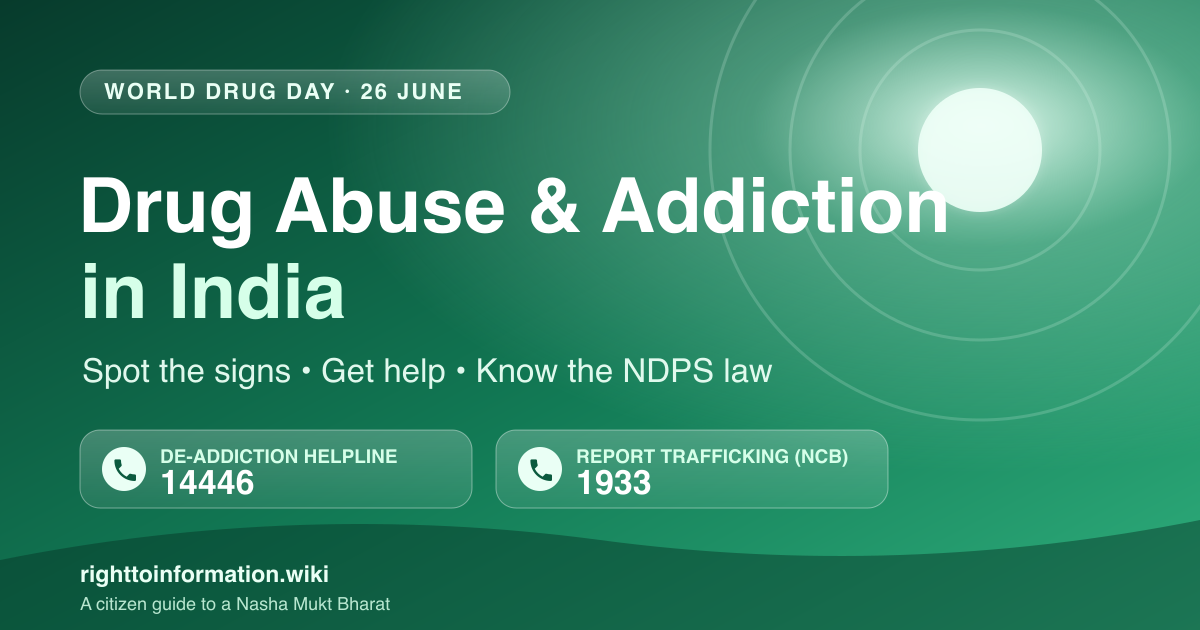
Drug Abuse and Addiction in India: Signs, Help and the Law
The scale of India's drug problem, the warning signs, the NDPS law, helplines 14446 and 1933, and how agencies can build a Nasha Mukt Bharat.
31 May 2026
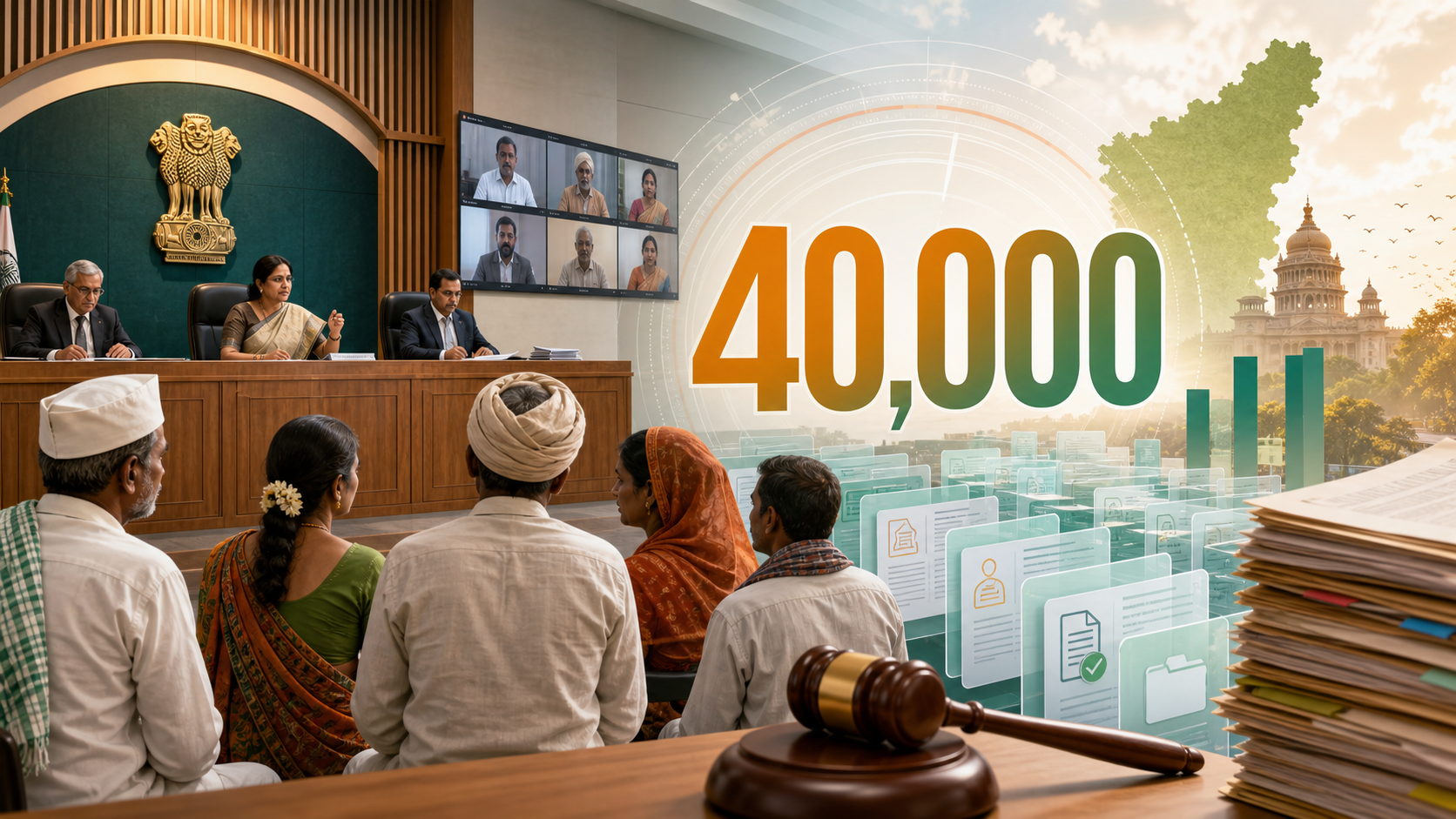
40,000 RTI Cases, One Democratic Triumph
How Karnataka's backlog clearance, hybrid hearings, penalties, and Section 4 disclosure push became a blueprint for modern Information Commissioners.

26 May 2026
RTI applicant cannot insist on original documents after accessible records are supplied
What the Gujarat High Court ruling changes for applicants, PIOs, and appeal strategy.
26 May 2026
IPL Ticket Refund and RTI: How Fans Can Seek Information
Use RTI to uncover public permissions, policing, stadium records, and notices after cancelled matches.
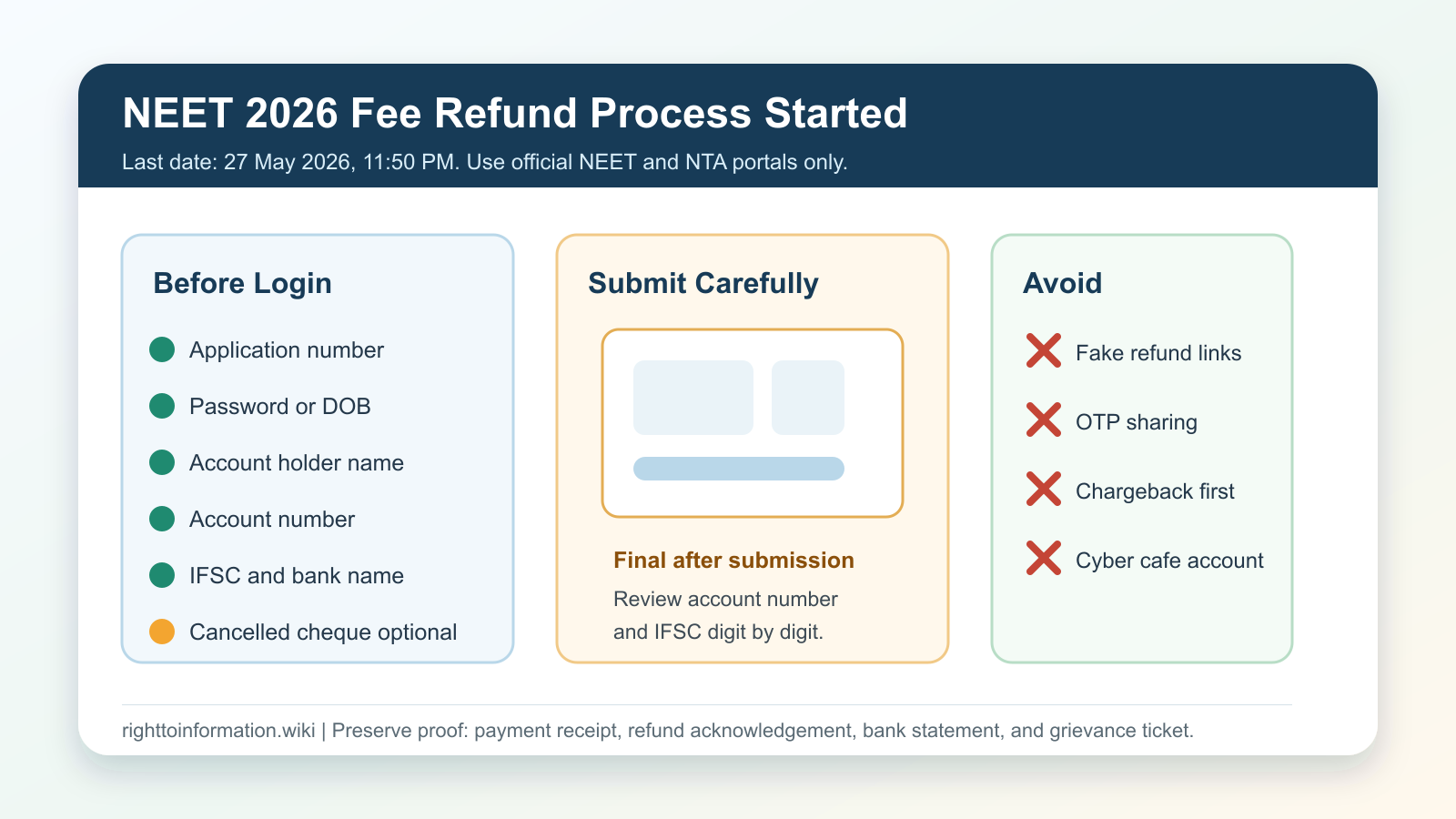
26 May 2026
NEET 2026 Fee Refund Process Started
Deadline, official portal steps, bank-detail checks, and what to do if the refund fails.

May 2026
India's Cultural Heritage Mapping: What the Data Shows
Records citizens can ask for when surveys, conservation files, and budgets are missing from view.

May 2026
जहाँ कृत्रिम बुद्धिमत्ता समाप्त होती है, वहाँ आरटीआई प्लेबुक शुरू होती है
A practical bridge from automated answers to record-backed accountability.
15 May 2026
Why Customer Care Never Calls You Back
How complaint loops exhaust consumers, and how to preserve the paper trail.

15 May 2026
Fake Work From Home Jobs in India
Telegram tasks, data-entry frauds, salary scams, and safer complaint steps.

15 May 2026
Telegram Trading Groups Explained
How fake screenshots and paid channels trap investors before they verify the adviser.

15 May 2026
The Screenshot Economy: Why Proof Matters More Than Truth
What to save, how to label it, and why clean evidence changes complaint outcomes.
Dated archive
- What Caused Nepal Floods? India Risk — citizen guide 2026. 29 August 2026.
- Van Mahotsav Week 2026: Why Planting One Tree Matters. 29 June 2026.
- Blood Donation in India: Who Can Donate and What to Expect. 14 June 2026.
- Blood Group Compatibility: Who Can Donate to Whom. 14 June 2026.
- Drug Abuse and Addiction in India: Signs, Help and the Law. 13 June 2026.
- CIC weekly digest. 7 September 2026.
- CIC weekly digest. 31 August 2026.
- CIC weekly digest. 24 August 2026.
- CIC weekly digest. 17 August 2026.
- CIC weekly digest. 10 August 2026.
- CIC weekly digest. 3 August 2026.
- CIC weekly digest. 27 July 2026.
- CIC weekly digest. 20 July 2026.
- CIC weekly digest. 13 July 2026.
- CIC weekly digest. 6 July 2026.
- CIC weekly digest. 29 June 2026.
- CIC weekly digest. 22 June 2026.
- CIC weekly digest. 15 June 2026.
- CIC weekly digest. 8 June 2026.
- CIC weekly digest. 25 May 2026.
- CIC weekly digest. 18 May 2026.
- CIC weekly digest. 15 May 2026.
Related
Last reviewed on
29 August 2026
Top 20 Ministries Receiving the Most RTI Applications
Quick Reply: Data-backed analysis from CIC Annual Reports: the top 20 Central Government ministries that receive the most RTI applications in India, the subjects citizens ask.
Practice this in 30 seconds. Use our free RTI Assistant — AI-driven drafting, First Appeal, Second Appeal in one place.

In one line. Every year, close to 14 lakh RTI applications are filed with Central Government public authorities. The distribution is uneven — five ministries alone handle nearly half. This data-backed article maps the top 20, the subjects citizens ask most about, and how to file your next RTI to the right office.
Data sources used.
- Central Information Commission (CIC) Annual Reports, 2021-22 through 2024-25.
- Analysis by Commonwealth Human Rights Initiative (CHRI), the longest-running independent RTI-data watchdog in India.
- Mainstream media reports quoting CIC data.
- Readers are encouraged to consult
cic.gov.in/reports/annual-reportsfor primary figures.
Did you know? The CIC's 2021-22 Annual Report shows 14.21 lakh RTI applications filed with Central public authorities that year — a 6.55% increase over the previous year. The top five ministries (Finance, Railways, Corporate Affairs, Communications, Education) together handled 46.26% of the total volume.
What Indians file RTI applications about
Quick Reply: A practitioner's note on the subject-matter pattern of Right to Information applications in India: what citizens file about, where the Public Information Officer.
Practice this in 30 seconds. Use our free RTI Assistant — AI-driven drafting, First Appeal, Second Appeal in one place.


An evaluatory note on the subject-matter pattern of Right to Information applications in India. Drawn from the annual reports of the Department of Personnel and Training, the published reports of the Satark Nagrik Sangathan, and the case-law line at the Central Information Commission and the Supreme Court. The note is for applicants, Public Information Officers, First Appellate Authorities, and researchers who want to see where the Act works, where it stops, and why.
In one line. Indians file the largest share of their RTI applications on service matters, land records, pensions and retirement benefits, police and FIR matters, and education. The Public Information Officer typically gives a satisfactory reply on applications for the applicant's own record (service book, pension file, income tax refund, marksheet verification, FIR copy, sanction order for a specific licence). Applications that most often end up in appeal before the Commission turn on Section 8(1)(j) personal information, Section 8(1)(e) fiduciary, Section 8(1)(h) pending investigation, file notings, “no such record” refusals, and on records of political, regulatory, and judicial bodies. The 14 November 2025 amendment to Section 8(1)(j) will change the shape of the appeal volume in the next two years.