40,000 RTI Cases: Karnataka Blueprint for the Commission
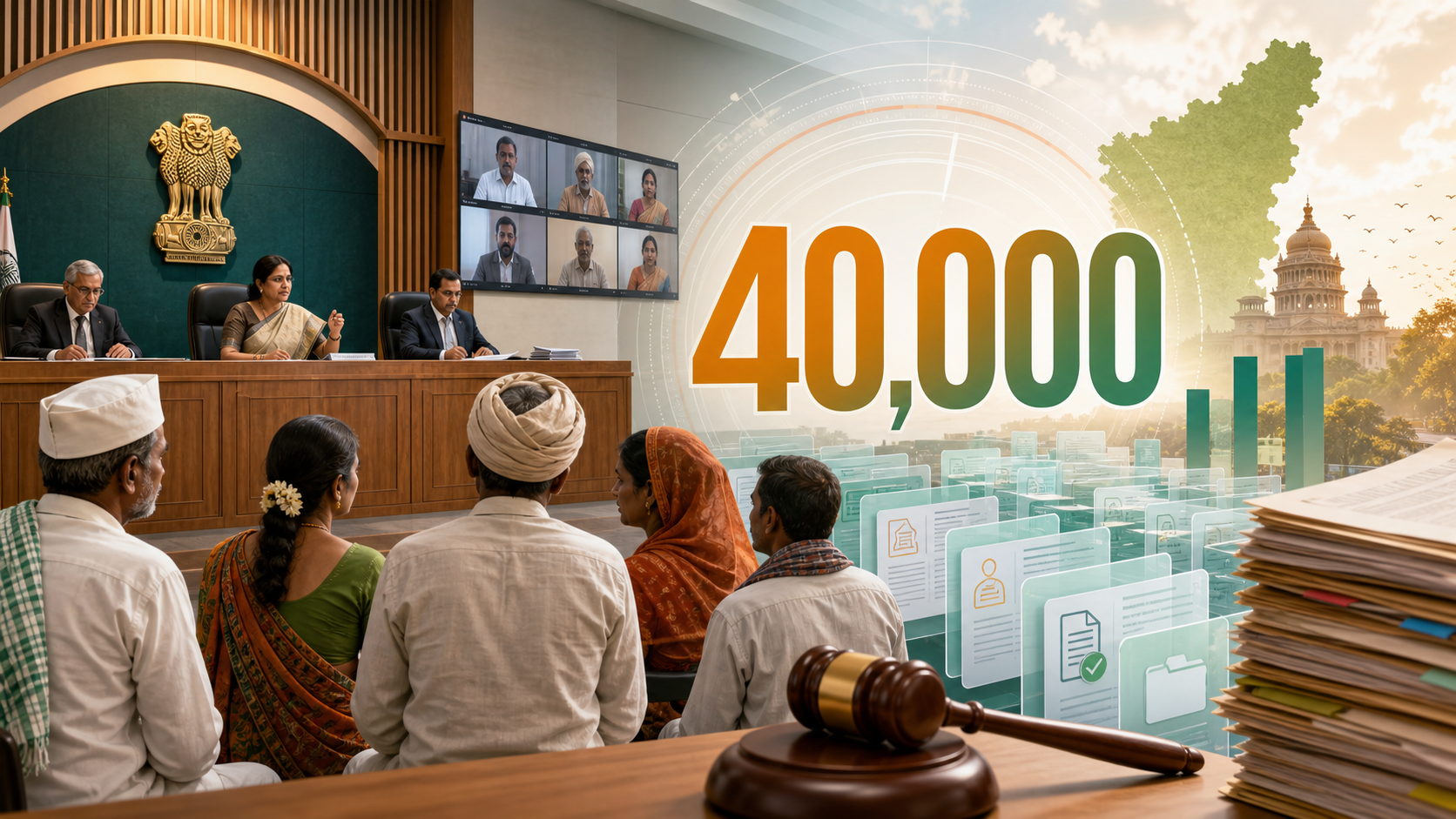
Quick Reply: Karnataka Information Commission's disposal of 40,000 RTI second appeals in one year is more than a record. It is a blueprint for modern Information Commissioner leadership.
The Right to Information Act was never meant to be a polite request box. It was designed as a democratic instrument: a way for an ordinary citizen to compel the state to explain itself. In India, where a missing road file or delayed drinking-water project can define daily life, RTI is not merely a legal right. It is a lever of dignity.
That is why the Karnataka Information Commission's disposal of 40,000 RTI second appeals in a single year deserves to be treated as a national governance milestone. It is a signal that an Information Commission can move from passive adjudication to active democratic repair.
Karnataka's achievement is especially striking because the Commission did not begin from a clean slate. When the new batch of commissioners took charge, they inherited a backlog of over 56,000 cases. For many citizens, those appeals represented years of waiting after departments had already failed to answer.
The Karnataka Information Commission, including commissioners such as B. Venkat Singh and Prakash Narayan Channal, has shown that the old culture of slow files and distant hearings is not inevitable. With concentrated drives, hybrid hearings and firm enforcement, it has offered a working model for RTI backlog clearance across India.
How the 40,000-case milestone was met
The most important lesson from Karnataka is that the Commission treated backlog as an administrative problem to be solved.
The Commission launched a targeted special drive against chronic pendency. Nearly 75% of long-pending cases from 2010 to 2020 were cleared through this focused approach. Old RTI appeals are not harmless paperwork. They often concern public works, public money, appointments, benefits, land records, village infrastructure, and departmental accountability.
Karnataka's answer was not symbolic hearing. It was throughput with purpose:
- benches such as Belagavi and Kalaburagi conducted intensive daily hearings;
- daily listings often rose to 40 to 60 matters;
- proceedings used hybrid modes, combining online and offline hearings;
- priority attention went to practical citizen issues such as drinking water, roads, electricity, health services and village infrastructure.
This matters for transparency in governance because the form of access shapes the reality of access. A citizen from a rural taluk should not have to lose wages and travel across districts simply to ask why a road was not built or why a health facility has no medicine. Hybrid hearings are not a technical upgrade alone. They are a constitutional equaliser.
The Belagavi bench's penalty record also shows that disposal was not achieved by casual closure. During a recent 101-day sprint, more than Rs 4.33 lakh was collected in penalties from non-compliant officials. The Belagavi bench's total penalty collection was reported at Rs 42.32 lakh. In RTI terms, this is the correct balance: punish delay where necessary, while pushing departments toward better disclosure.
The anatomy of a great Information Commissioner
Karnataka's success gives India a clear case study in Information Commissioner qualities. A modern commissioner can no longer be only a retired adjudicator sitting behind a desk. The office now demands an empathetic judge, an agile project manager, a digital reformer, and a fearless constitutional actor.
Here are the five pillars visible in the Karnataka model.
1. Administrative drive and execution
The first quality is execution discipline. A backlog of 56,000-plus cases cannot be wished away by routine cause lists. It needs segmentation, prioritisation, bench-wise targets, and review.
Karnataka's special drive recognised that old cases need a different strategy from fresh cases. Chronic pendency from 2010 to 2020 required dedicated attention. Without such targeting, the oldest citizens and disputes remain buried while newer matters keep entering the system.
A great Information Commissioner must therefore think like a public systems leader. The question is not only, “What order should I pass in this file?” It is also, “How do I design the docket so justice is not trapped by the docket?”
2. Digital adaptability
The second quality is digital flexibility. The hybrid model used by Belagavi and Kalaburagi directly attacked one of the greatest barriers in RTI litigation: distance.
Online hearings allow citizens, PIOs and departments to appear without unnecessary travel. Offline options preserve access for those who need physical proceedings. Together, the two modes increase throughput without excluding people who are not digitally comfortable.
This is the future of democratic accountability India needs: technology as administrative fairness.
3. Grassroots empathy
The third quality is empathy for the real stakes of information. RTI is often discussed in the language of files, exemptions and appellate jurisdiction. On the ground, it is frequently about whether a village has drinking water, whether a road bill was paid without construction, whether a health centre has sanctioned staff, or whether a welfare benefit was wrongly stopped.
Karnataka's emphasis on rural infrastructure cases shows a mature understanding of citizen empowerment. A commissioner who treats a drinking-water file as urgent understands the moral architecture of the RTI Act.
The best commissioners do not dilute legal neutrality. They deepen it by recognising that delay harms the poor more sharply.
4. Fearless enforcement
The fourth quality is the courage to use Section 20 penalties. Many Public Information Officers comply only when delay has consequences. A commission that never penalises becomes advisory; a commission that penalises fairly becomes constitutional.
The penalty figures from Belagavi matter because the goal is behavioural correction. When erring officials know that non-compliance can carry financial consequences, the department begins to take RTI timelines seriously.
Fearless enforcement is not hostility toward bureaucracy. It is respect for law.
5. Systemic statesmanship and proactive disclosure
The fifth quality is the most visionary: a great Information Commissioner should reduce the need for RTI applications.
Section 4 of the Right to Information Act requires public authorities to disclose key information proactively. Budgets, powers, duties, decision processes, schemes, beneficiaries, norms, tenders and records should not remain locked until a citizen files an application.
Karnataka's push for public departments to create external RTI dashboards points toward the correct future: default openness. If departments publish live, searchable, citizen-friendly data, appeals fall naturally. The best backlog clearance strategy is preventing avoidable RTIs through better public disclosure.
Accountability today, openness tomorrow
The Karnataka model is powerful because it combines two ideas that are often treated separately.
First, it insists on accountability today. Hear the cases. Clear the old files. Penalise non-compliance. Make PIOs answer.
Second, it builds toward openness tomorrow. Use Section 4. Demand proactive disclosure. Make dashboards public. Turn repeated RTI questions into automatically published datasets.
That is the real governance lesson. A successful Information Commission is not one that merely processes more appeals. It is one that teaches the state to become easier to question.
Karnataka's disposal of 40,000 second appeals in one year should therefore be celebrated as a democratic triumph, but not as an endpoint. It is a blueprint. Other State Information Commissions can study the same ingredients: special drives, hybrid hearings, rural prioritisation, enforceable penalties, and Section 4 dashboards.
For citizens, the message is hopeful. The RTI Act still works when institutions choose to make it work. For commissioners, the message is sharper: leadership in an Information Commission is not ceremonial. It is operational, moral and constitutional.
Karnataka has shown what that leadership looks like. The rest of India should not merely applaud it. It should replicate it.