PM SVANidhi: Collateral-Free Loans for Street Vendors
Quick Reply: PM SVANidhi gives street vendors collateral free working capital loans of Rs 15,000 then Rs 25,000 then Rs 50,000 with a 7 percent interest subsidy and cashback.
Friend, if you push a vegetable cart, run a tea stall, sell fruit on a footpath, or lay out a sheet of clothes near the bus stand, this letter is for you. Someone has probably told you that the government has a loan meant for people like us, and that you do not need any property or gold to get it. That is true, and I want to walk you through it the plain way, the way I would explain it to you over a cup of chai, without the heavy words the forms use.
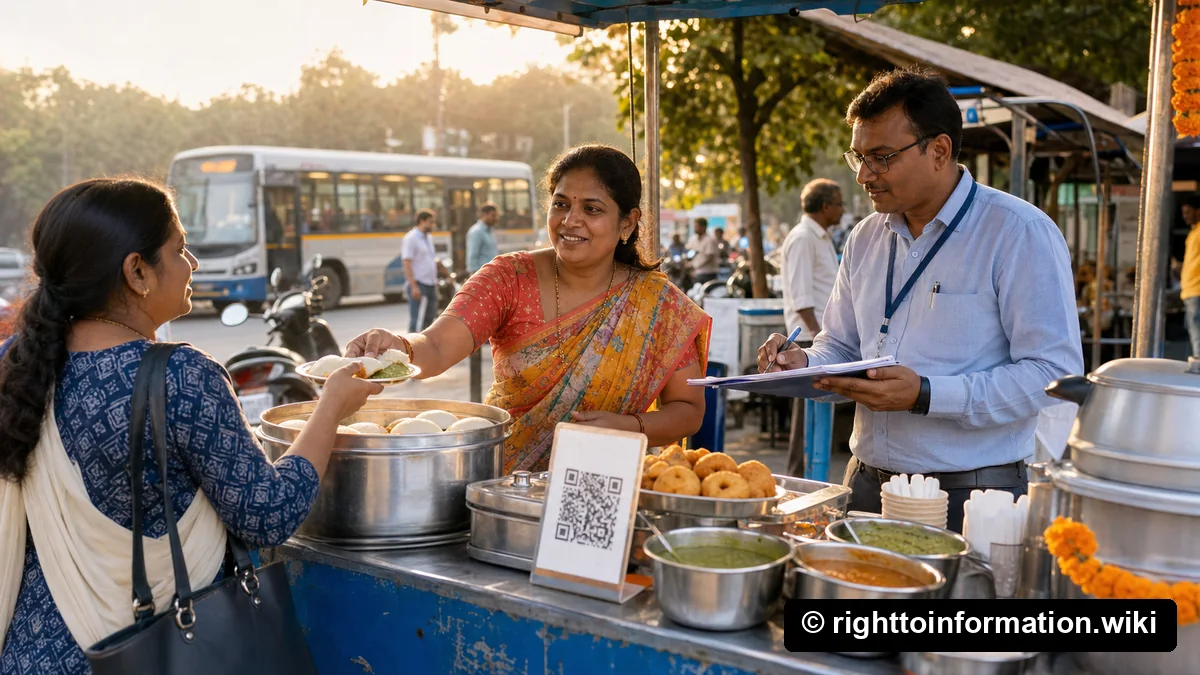
Let me start with a picture you will recognise. Think of a woman who sells idli and vada from a small handcart outside a railway station. During the lockdown years her savings dried up and she borrowed from a private lender at a rate that ate most of her daily earnings. She wanted to buy a bigger tawa and more raw material, but every rupee she made went back to the lender. That is the trap PM SVANidhi was built to break. Now picture the same woman a year later. She took a small first loan from the bank with no collateral, repaid it on time, stepped up to a bigger one, and the government paid back part of her interest into her account. Her cart is bigger, the moneylender is gone, and she has a small credit record in her own name. That is the whole idea in one story, and everything below is the detail.
PM SVANidhi gives urban street vendors collateral free working capital loans in a rising ladder of Rs 15,000, then Rs 25,000, then Rs 50,000, with a 7 percent interest subsidy on timely repayment and cashback for digital sales.
Launched: June 2020 · Restructured: August 2025 · Issued by: Ministry of Housing and Urban Affairs with the Department of Financial Services
What PM SVANidhi means for you
PM SVANidhi is short for Prime Minister Street Vendor's AtmaNirbhar Nidhi. In plain words it is a small working capital loan scheme for urban street vendors. It was started in June 2020 to help vendors restart the businesses they lost during the pandemic, and it has grown into a lasting credit and welfare programme.
The point of the scheme is simple. A street vendor rarely has land, a salary slip, or a guarantor, so ordinary banks used to say no. PM SVANidhi removes that wall. The loan is collateral free, which means you pledge nothing. You borrow a small amount, repay it over the year, and each time you repay on time you become eligible for a larger loan. On top of that the government pays you back part of the interest and gives you cashback for taking digital payments. Over time you build a credit history that opens other doors.
In August 2025 the Union Cabinet restructured the scheme and extended the lending period up to 31 March 2030, with a total outlay of Rs 7,332 crore. The restructured plan aims to reach 1.15 crore vendors, including 50 lakh new ones, so if you were left out earlier there is a fresh chance to come in.
Who can apply
The scheme is meant for street vendors working in urban areas and the peri-urban and rural stretches that fall inside a town's limits. You may be eligible if you fall in one of these groups.
- Vendors with a Certificate of Vending or an identity card issued by the Urban Local Body. This is the cleanest route.
- Vendors identified in the ULB survey but not yet handed a certificate. The system can generate a provisional Certificate of Vending for you.
- Vendors left out of the survey, or those who started vending after the survey, who obtain a Letter of Recommendation from the Urban Local Body or the Town Vending Committee.
- Vendors from surrounding areas who sell within the geographical limits of the town and have a Letter of Recommendation to that effect.
The scheme was framed for vendors who were selling on or before 24 March 2020, and the restructured version is being widened in a graded way beyond statutory towns to census towns and peri-urban areas. You will also need an Aadhaar and a bank account, since the loan and the benefits flow through the banking system. If you are not sure whether you are on the list, do not assume the worst. Ask your Urban Local Body office or a Common Service Centre to check your name before you give up.
What you get: the loan ladder and the UPI card
The heart of the scheme is a rising ladder of loans. You do not jump straight to the top. You climb one rung at a time by repaying on time.
- First loan up to Rs 15,000. Under the restructured scheme the opening loan was raised from the earlier Rs 10,000. It runs for about a year in easy monthly instalments.
- Second loan up to Rs 25,000. Once you clear the first loan, you become eligible for this larger one, raised from the earlier Rs 20,000.
- Third loan up to Rs 50,000. After a clean second loan, you can step up to this top rung for growing your business.
There is a newer benefit worth knowing about. Vendors who repay the second loan on time can get a UPI linked RuPay credit card, so you have a ready line of credit for sudden business or personal needs. The card limit has been reported at Rs 30,000, so please confirm the current figure and terms on the official portal or with your bank before you count on it.
None of these loans need collateral. You pledge no property, no gold, no guarantor. The credit risk is covered through a government backed guarantee, which is why the bank can lend to you without security.
The 7 percent interest subsidy and the cashback, in plain terms
Two extra benefits make this loan cheaper than any moneylender.
First, the interest subsidy of 7 percent a year. If you repay your instalments on time, the government credits an interest subsidy at 7 percent per year straight into your loan account. In practice this pulls down what the loan costs you. The catch is timely repayment, so keep your instalments regular.
Second, the digital cashback. To reward vendors who accept digital payments, the scheme pays cashback on your transactions. You can earn up to Rs 1,200 a year on your regular digital sales, at up to Rs 100 a month, when you take payments through a QR code or UPI. Under the restructured scheme there is also an additional cashback of up to Rs 400 a year on wholesale purchases you make digitally. So the more you move from cash to digital, the more small credits land in your account.
Put together, a collateral free loan, a 7 percent interest subsidy, and cashback mean the true cost of borrowing here is far below the street rate you may be paying now.
How to apply, step by step
- Confirm you are covered. Check whether you have a Certificate of Vending, an identity card, or a survey record. If you have none, ask the Urban Local Body or Town Vending Committee for a Letter of Recommendation.
- Reach the portal or a helper. Apply through the official portal at pmsvanidhi.mohua.gov.in, the PM SVANidhi mobile app, a Common Service Centre, or the lending bank branch. A Common Service Centre operator can fill the form for you.
- Give your Aadhaar and vending proof. You will do an Aadhaar based verification and attach your Certificate of Vending, identity card, or Letter of Recommendation.
- Let the bank verify and sanction. The bank checks your details and sanctions the loan. Because it is collateral free, there is no property paperwork.
- Take the money and repay on time. The loan comes as working capital. Repay the monthly instalments on schedule so you earn the interest subsidy and qualify for the next rung.
- Step up. After each loan is cleared, apply for the next tier, Rs 25,000 and then Rs 50,000, and later the UPI linked card.
Documents you need
| Document | Why it is needed |
|---|---|
| Aadhaar | For identity and Aadhaar based verification |
| Certificate of Vending, identity card, or Letter of Recommendation | To prove you are an eligible street vendor |
| Bank account | For the loan, the interest subsidy, and the cashback |
| Aadhaar linked mobile number | For the verification OTP and updates |
There is no fee to apply for a PM SVANidhi loan. If any agent asks you to pay a bribe or a commission to get your loan sanctioned, that is a warning sign, and you can escalate it.
SVANidhi se Samriddhi: the welfare linkage
The scheme is not only about a loan. Through a linked programme called SVANidhi se Samriddhi, the government tries to connect you and your family to its other welfare schemes in one place. As reported by the Ministry, this component has connected beneficiaries to 8 central welfare schemes, and profiling of more than 47 lakh vendors and their families has been done, with over 1.46 crore scheme sanctions recorded as of 9 December 2025.
In simple terms this means that when you come in for the loan, an official may also check whether you and your family qualify for things like a pension, life and accident cover, a ration card link, or a maternity benefit, and help you enrol. Camps called Lok Kalyan Melas are held for this. So treat your SVANidhi visit as a doorway to more than money.
Common problems and how to fix them
- No Certificate of Vending. Approach the Urban Local Body or Town Vending Committee for a certificate or a Letter of Recommendation. Many cities issue these without charge.
- The bank keeps delaying or refusing. A collateral free scheme sometimes meets a reluctant branch. Ask for the reason in writing and escalate to the State Level Bankers Committee coordinator for PM SVANidhi.
- Repayment slipped and the next loan is stuck. Talk to your branch early about restructuring rather than going silent, since a clean record is what unlocks the next tier and the interest subsidy.
- Cashback or interest subsidy not credited. Check that your Aadhaar, bank account, and mobile number are correctly linked, then raise it with the branch, because a broken link is the usual reason a credit does not arrive.
Benefit delayed or rejected? A short RTI can help
If your loan, subsidy, or cashback is stuck and the bank or office keeps giving you vague answers, a written Right to Information request often moves the file, because the public authority then has to reply in writing within the statutory timeline. Ask narrow, factual questions about the status of your application and the reason for delay. You can draft one in minutes with the AI RTI Drafter and learn the full filing and appeal process in The RTI Playbook.
Where this scheme came from
PM SVANidhi was launched in June 2020 by the Union government led by Prime Minister Narendra Modi, first as pandemic relief for street vendors and then, after the August 2025 restructuring, as a lasting credit and welfare programme running up to 2030. It is implemented by the Ministry of Housing and Urban Affairs together with the Department of Financial Services, with States, banks, and Urban Local Bodies delivering it on the ground. You can see it beside every other central and state welfare scheme on the All Modi-era Sarkari Yojana index 2014 to 2026.
Frequently asked questions
Do I need any property or a guarantor for the loan?
No. Every PM SVANidhi loan is collateral free. You pledge no property, no gold, and no guarantor. A government backed guarantee covers the bank's risk.
Can I ask for Rs 50,000 straight away?
No. The loan is a ladder. You start with the first loan up to Rs 15,000, repay on time, move to the second up to Rs 25,000, and only then reach the third up to Rs 50,000. Each rung depends on a clean repayment of the one before.
How does the 7 percent interest subsidy reach me?
When you repay your instalments on time, the government credits an interest subsidy at 7 percent a year into your loan account. If you miss repayments, you can lose the subsidy, so keep your instalments regular.
What is the UPI linked credit card?
Vendors who repay the second loan on time can get a UPI linked RuPay credit card for ready access to credit. The limit has been reported at Rs 30,000, so confirm the current limit and terms on the official portal or with your bank.
I was not in the old survey list. Can I still apply?
Yes. Ask the Urban Local Body or Town Vending Committee for a Letter of Recommendation. The restructured scheme also aims to add 50 lakh new vendors, so there is fresh room.
Does the cashback come as cash in hand?
No. The cashback is credited to your linked bank account for digital sales, up to Rs 1,200 a year at up to Rs 100 a month, with an additional amount for digital wholesale purchases.
Summary and next step
Bottom line: PM SVANidhi is a collateral free working capital loan for urban street vendors, rising from Rs 15,000 to Rs 25,000 to Rs 50,000, with a 7 percent interest subsidy on timely repayment and cashback for digital sales. Apply through the portal, a Common Service Centre, or your bank. If a benefit is stuck, a short RTI usually gets a clear answer.
- Apply or check status: pmsvanidhi.mohua.gov.in
- If delayed, draft an RTI: AI RTI Drafter
- All government schemes: Sarkari Yojana index
Related schemes
Sources
- Official portal: pmsvanidhi.mohua.gov.in
- PIB feature, SVANidhi Empowering Street Vendors, 20 December 2025 (restructured tranches, cashback, SVANidhi se Samriddhi)
- PIB and Cabinet decision, Restructuring and extension of PM SVANidhi, 27 August 2025 (lending period to 31 March 2030, outlay Rs 7,332 crore, 1.15 crore beneficiaries)
- Union Budget 2025 announcement on enhanced loans and the UPI linked RuPay credit card
- Implemented by the Ministry of Housing and Urban Affairs with the Department of Financial Services
Last reviewed: 1 July 2026.