Frame the record
Turn the problem into a request for file notes, orders, status sheets, inspection reports or action-taken records.
RTI Book India
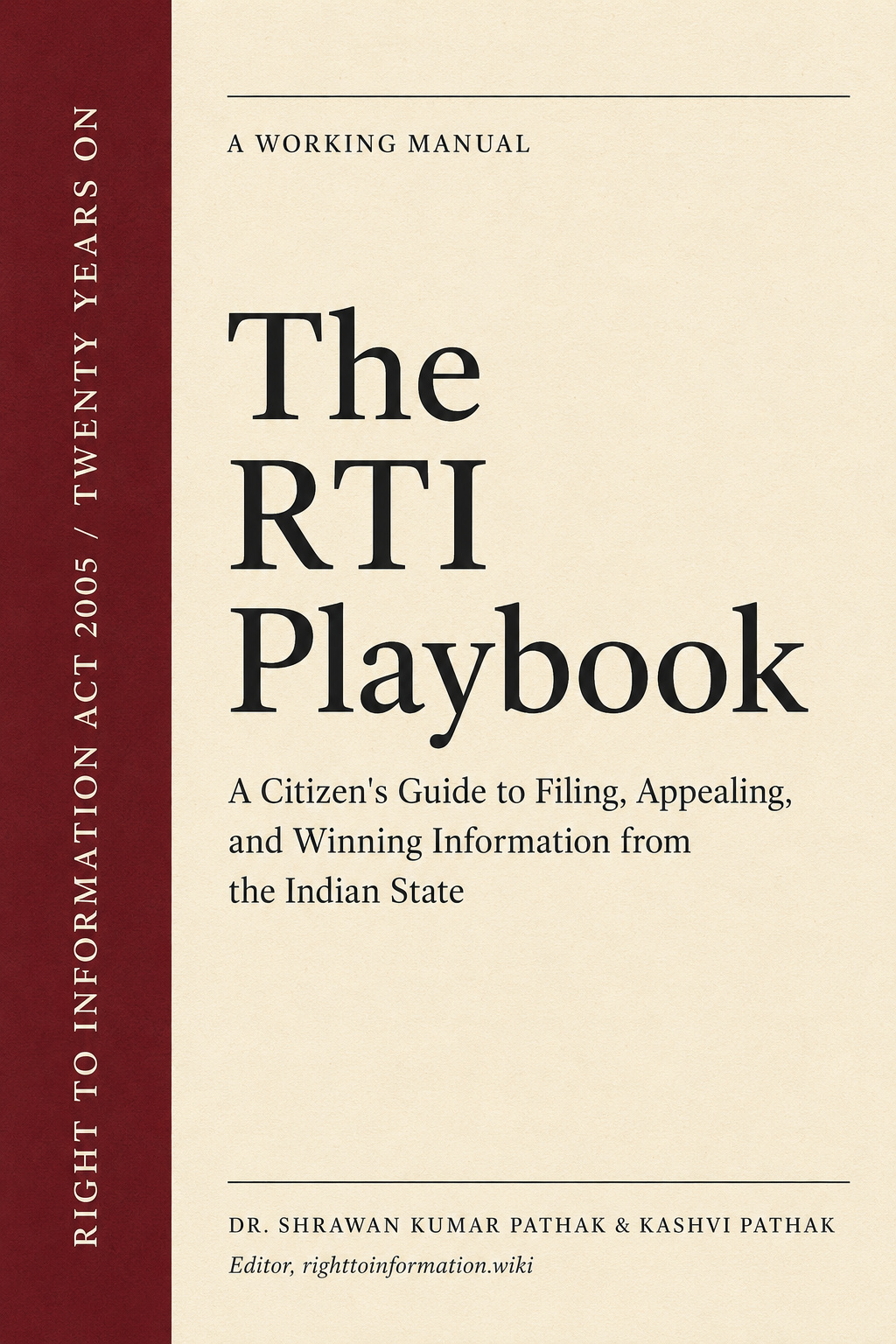
A practical RTI guide for Indian citizens, students, journalists, lawyers and transparency activists. Learn how to frame questions, avoid common mistakes, and move from application to first appeal.
Simple language. India-focused examples. Built to be used with RTI Wiki's free templates and tools.
जहाँ एआई समाप्त होती है
एक युवा आवेदक ने ड्राइविंग लाइसेंस फाइल पर आरटीआई का पूरा काम एआई को सौंप दिया। जवाब तुरंत मिला, नियम और केस जैसे दिखे, पर कार्यालय गलत था और सवाल रिकॉर्ड आधारित नहीं था। बाद में चैट ने कहा, “माफ कीजिए, गलती मेरी थी।” आरटीआई में ऐसी गलती समय, फीस और अपील की जमीन खराब कर देती है। प्लेबुक इसलिए है कि नागरिक मसौदे से पहले प्रक्रिया समझे: सही रिकॉर्ड, सही लोक प्राधिकारी, सही समय-सीमा और सही अपील।

Use it at the desk
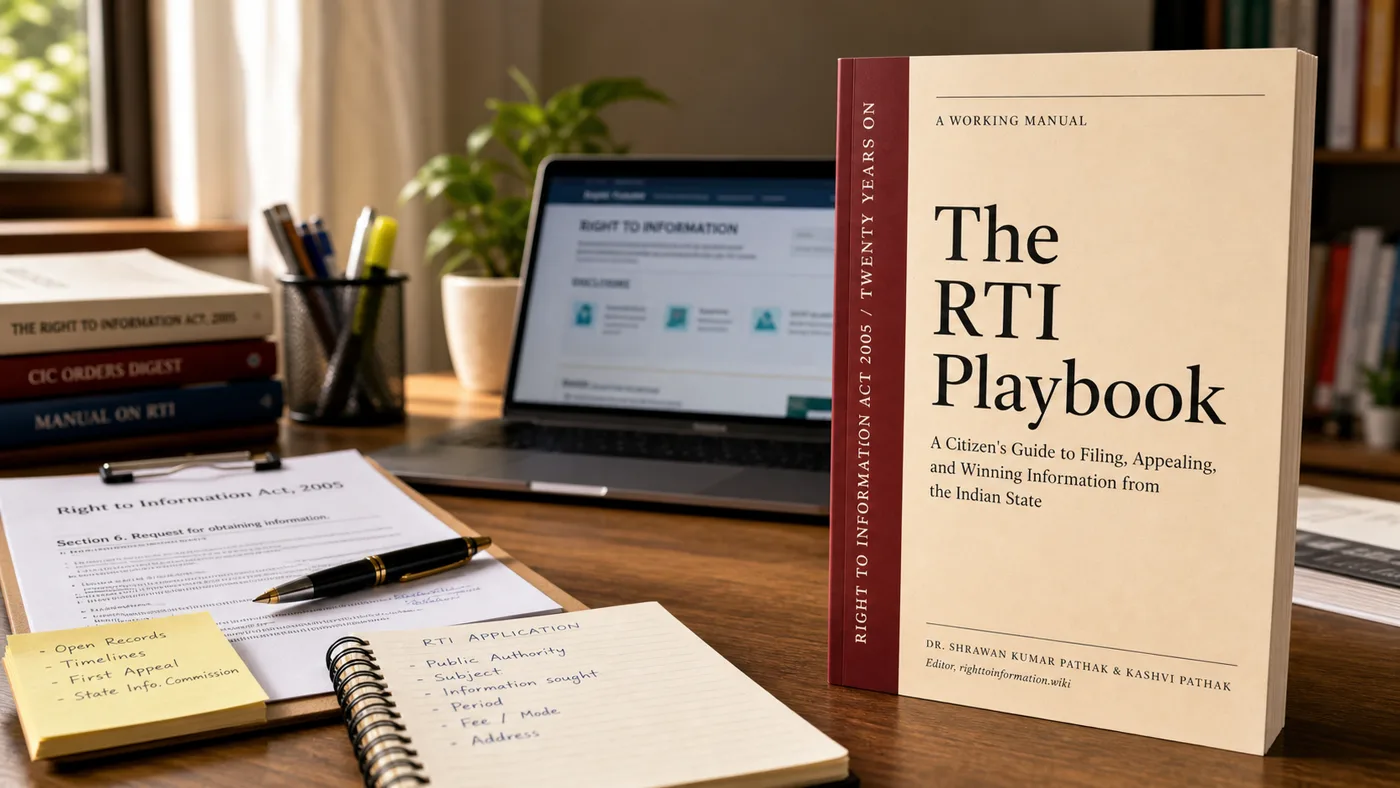
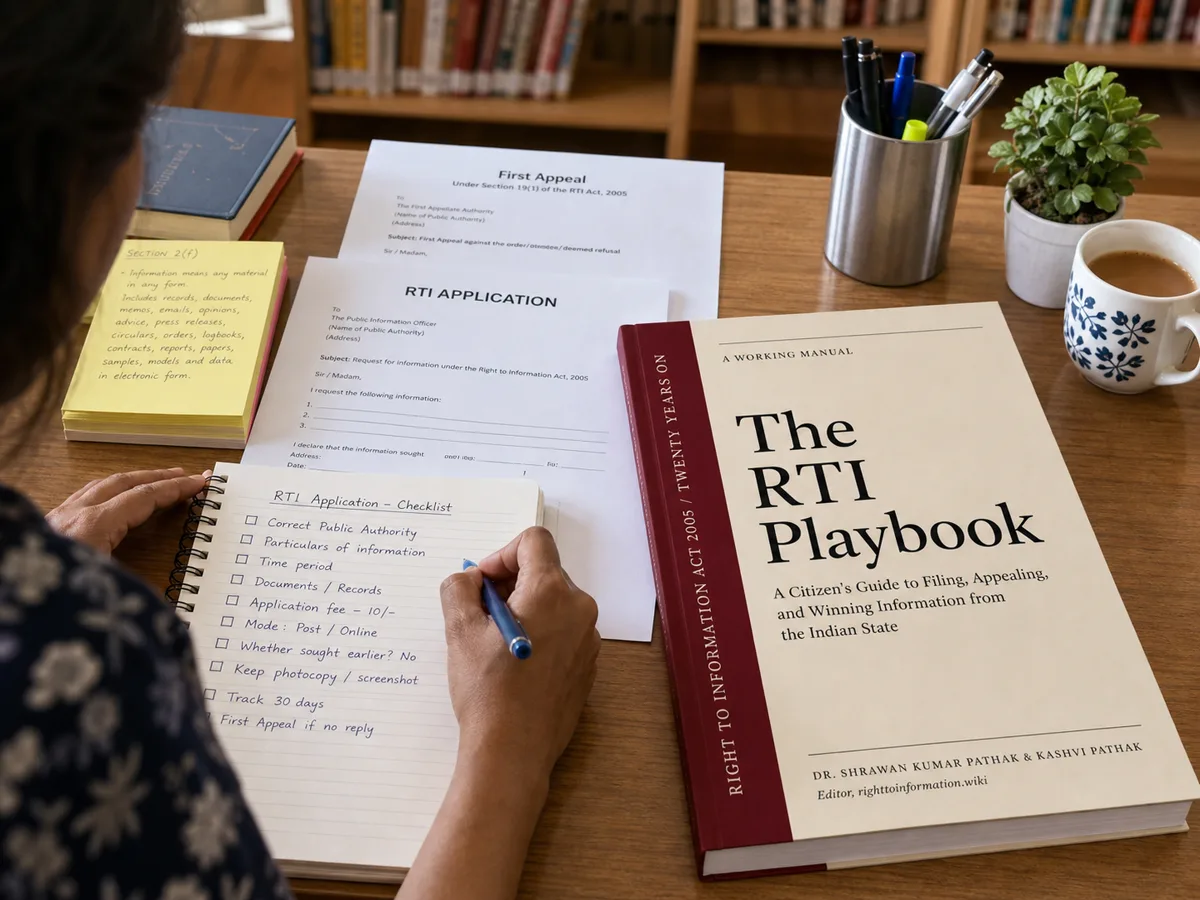
The book is meant to sit beside the actual RTI work: identifying the public authority, writing record-based points, tracking thirty days, and preparing the first appeal when needed.
Embedded podcast video
Use this as the quick audio-visual entry point before opening the book. It explains why record-based questions, deadlines and appeals matter more than polished legal language.
Scroll the method
Turn the problem into a request for file notes, orders, status sheets, inspection reports or action-taken records.
Save the receipt, count the reply period, and keep the application ready for appeal review.
Separate delay, partial disclosure, wrong transfer, vague denial and valid exemption before reacting.
State facts, grounds and relief in a way the First Appellate Authority can act on.
Why this book matters
Many applications ask for explanations, opinions or too many mixed issues. This book focuses on practical RTI discipline: clear facts, specific records, correct authority, useful timelines and appeal-ready wording.
Next step
Buy the book for the complete method, or try the free templates first if you are filing today.
What you will learn
Next step
Use the free toolkit to prepare your facts and timeline. The book explains how to turn that preparation into clean RTI points and appeal grounds.
Who should read this book
Mistakes solved in the book
Next step
The best first appeal starts before filing the first RTI. Keep the book handy for drafting, tracking and reply review.
If you want structured learning, not just a reference
The book is a linear reading companion. The CPD Academy is a five-track Coursera-style course path with module quizzes, a final exam and a verifiable certificate — built around the same drafting, exemption and appeal discipline the book teaches.
Free RTI Toolkit
Use these free checklists with the book. They help you prepare facts, documents, timelines and appeal grounds before submitting an RTI.
Reader notes
“5 out of 5 stars. Exceptional and action-oriented! A must-have for every citizen. I bought The RTI Playbook just yesterday, started reading it immediately, and I honestly cannot put it down. It is incredibly well-written, practical, and breaks down complex legal processes into simple, actionable steps. It takes away the intimidation of dealing with government bureaucracy. If you want to understand how to hold authority accountable and actually win information from the state, this book is an essential toolkit. Every Indian citizen should own a copy! Reviewed in India on 20 May 2026.”
Naitik
FAQ
It is for Indian citizens, students, journalists, lawyers, researchers and transparency activists who want a practical way to use the RTI Act.
No. It is an educational guide and practical drafting reference. For case-specific legal advice, consult a qualified professional.
Yes. Use RTI Wiki for updated templates, tools, state portal links and free resources. Use the book as your structured learning companion.
Yes. The copy is written for first-time RTI applicants as well as people who already file RTIs and want better drafting discipline.
The book is available from our online bookstore — use the Get the Book button on this page.