Anticipatory Bail Rejected: No Forced Surrender
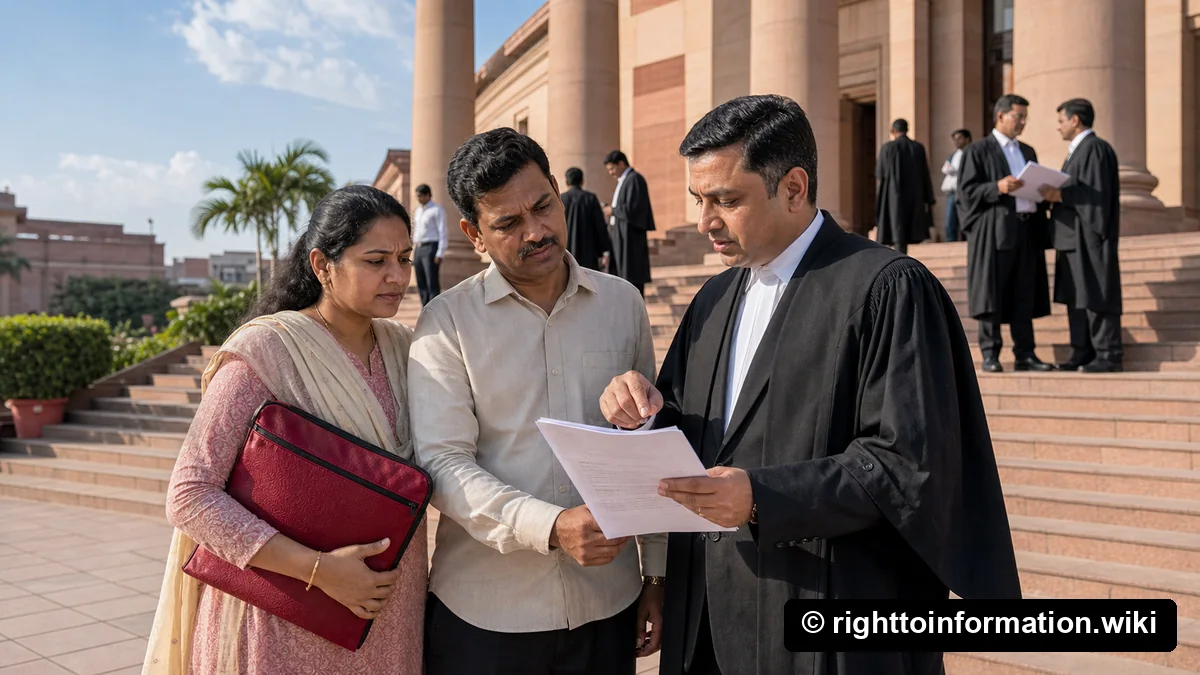
Quick Reply: Anticipatory bail rejected? A court cannot force you to surrender. The Supreme Court held such a direction is wholly without jurisdiction. Know your next steps.
If a court rejects your anticipatory bail, it cannot in the same order direct you to surrender and apply for regular bail. On 23 April 2026 the Supreme Court held such a surrender direction is “wholly without jurisdiction”. You may approach the next higher court instead.
A rejection of anticipatory bail is not the same as an order to go to jail. The court can refuse your plea, but it cannot turn that refusal into a command to surrender. The Supreme Court made this clear in April 2026, and this guide explains what the ruling means and what you should do next.
What to do if your anticipatory bail is rejected
- The court cannot force you to surrender. A rejection only means protection from arrest was not granted. The same order cannot direct you to surrender and then seek regular bail. The Supreme Court called such a direction “wholly without jurisdiction”.
- Check if it is a private-complaint case. If the case started on a private complaint and not a police FIR, the police cannot arrest you unless the magistrate issues a non-bailable warrant along with the summons. A simple summons does not mean arrest.
- You can move the next higher court. If a Sessions Court rejected your plea, you can apply to the High Court. If the High Court rejected it, you can move the Supreme Court by a special leave petition.
- Do not surrender out of fear. Surrender is your choice, not an automatic result of rejection. Take legal advice before stepping into custody, because rejection alone does not authorise the police to pick you up in every case.
- Read the operative part of the order carefully. See exactly what the court refused and whether it added any wrong direction. A surrender direction tacked onto a rejection can itself be challenged.
- Prepare for regular bail only if and when arrested. If arrest actually happens, you apply for regular bail under the normal procedure. You are not obliged to volunteer for custody first.
What the Supreme Court actually said
The case is Om Prakash Chhawnika v. State of Jharkhand, SLP (Crl.) No. 16221/2025, decided on 23 April 2026 by Justices J.B. Pardiwala and Ujjal Bhuyan. It is a short order, also reported as 2026 LiveLaw (SC) 419.
The High Court had rejected anticipatory bail and, in the same breath, told the applicant to surrender and apply for regular bail. The Supreme Court rejected that approach.
“If the Court wants to reject the anticipatory bail, it may do so but the Court has no jurisdiction to say that the petitioner should now surrender.”
The Court held the High Court's direction to surrender was “wholly without jurisdiction”.
The Court also noted that in a private-complaint case the police have no power to arrest the accused unless a non-bailable warrant is issued along with the summons. It criticised unnecessary anticipatory bail applications and surrender directions, and asked its Registry to forward copies of the order to the Registrar Generals of the Bihar and Jharkhand High Courts for the attention of the Chief Justices.
Legal position in India
Anticipatory bail is granted under Section 482 of the Bharatiya Nagarik Suraksha Sanhita 2023, the provision that replaced Section 438 of the old Criminal Procedure Code. It protects a person from arrest in a non-bailable case before any arrest happens.
A court hearing such a plea has two choices. It can grant the protection or it can refuse it. The Om Prakash Chhawnika order makes clear there is no third option of refusing and then ordering surrender. Refusal simply restores the ordinary legal position, where arrest depends on whether the law actually permits it in that case.
This matters most in private-complaint cases. When a case proceeds on a private complaint, the magistrate often issues a summons, not a warrant. The accused is then expected to appear, not to be arrested. Arrest needs a non-bailable warrant. So a blanket surrender direction ignores this and assumes custody where the law may not require it.
For the basics of how to seek this protection, see https://righttoinformation.wiki/anticipatory-bail-bnss-482-how-to-apply-india and for how long it lasts, see https://righttoinformation.wiki/anticipatory-bail-expire-after-chargesheet-summons-india .
Documents you should keep ready
- Certified copy of the order rejecting anticipatory bail.
- Copy of the FIR or the private complaint that started the case.
- Copy of any summons or warrant issued by the magistrate.
- Your earlier anticipatory bail application and its annexures.
- A note of the exact dates - filing, hearing, and rejection - for the next court.
Common mistakes to avoid
- Treating rejection as an arrest order. Rejection under BNSS Section 482 does not by itself authorise arrest in every case. Check the nature of the case first.
- Surrendering automatically because the order said so. A surrender direction attached to a rejection can be without jurisdiction, as the Supreme Court held.
- Ignoring whether it is a private complaint. In a private-complaint case, a plain summons does not allow arrest. A non-bailable warrant is needed.
- Letting the appeal window lapse. Move the next higher court promptly instead of waiting in fear.
- Filing an anticipatory bail plea when none was needed. The Court itself criticised unnecessary applications. Assess the real risk of arrest first.
Worked example (illustrative only)
A shopkeeper in a district town faces a private complaint over a money dispute. The magistrate issues a summons, not a warrant. Worried, he files for anticipatory bail. The Sessions Court rejects it and adds that he must surrender and seek regular bail. Relying on the Om Prakash Chhawnika order, his lawyer points out that the surrender direction is without jurisdiction and that, on a mere summons in a private complaint, the police cannot arrest him. He appears in answer to the summons and contests the case without going into custody.
Frequently asked questions
Does rejection of anticipatory bail mean I will be arrested?
No. Rejection only means the protection was not granted. Whether you can be arrested depends on the type of case. In a private complaint with only a summons, the police cannot arrest you unless a non-bailable warrant is issued.
Can the court order me to surrender after rejecting my plea?
No. The Supreme Court in Om Prakash Chhawnika v. State of Jharkhand held that a court has no jurisdiction to direct surrender after rejecting anticipatory bail. Such a direction was called “wholly without jurisdiction”.
What can I do if my anticipatory bail is rejected?
You can approach the next higher court. If a Sessions Court rejected your plea, move the High Court. If the High Court rejected it, you can file a special leave petition before the Supreme Court. Take legal advice before surrendering.
What is special about private-complaint cases?
In a private complaint, the magistrate usually issues a summons. The police cannot arrest you on a summons. Arrest needs a non-bailable warrant. So an automatic surrender direction ignores this protection, as the Supreme Court noted.
Under which law is anticipatory bail granted?
Anticipatory bail is granted under Section 482 of the Bharatiya Nagarik Suraksha Sanhita 2023. This provision replaced Section 438 of the old Criminal Procedure Code. It guards against arrest in a non-bailable case before arrest happens.
Should I surrender if the order tells me to?
Not automatically. A surrender direction attached to a rejection can be without jurisdiction. Surrender is your choice. Take legal advice first, because rejection alone does not always authorise the police to arrest you.
Which court decided this and when?
The Supreme Court decided Om Prakash Chhawnika v. State of Jharkhand, SLP (Crl.) No. 16221/2025, on 23 April 2026. The bench was Justices J.B. Pardiwala and Ujjal Bhuyan. It is also reported as 2026 LiveLaw (SC) 419.
Sources
- Om Prakash Chhawnika v. State of Jharkhand, SLP (Crl.) No. 16221/2025, Supreme Court of India, 23 April 2026. Indian Kanoon: https://indiankanoon.org/doc/38489673/
- Bharatiya Nagarik Suraksha Sanhita 2023, Section 482 (anticipatory bail).
- Read more practical guides in The RTI Playbook.
Related on RTI Wiki
Reader signal
Was this article useful?
Tap once if it helped you. These counters show other citizens which pages are worth reading.