✓
It teaches a method, not magic
The advice repeatedly pushes users toward specific records: status sheets, sanction orders, file notes, inspection reports, payment trails and reply timelines.
Independent citizen guidance for Indian public records
Because RTI Wiki is built for one practical job: helping citizens ask better questions, find the right office, preserve evidence, understand replies, and move from confusion to record-based action.

Trust Signals
Trust is not created by slogans. It comes from method, transparency, practical usefulness, and visible limits.
The advice repeatedly pushes users toward specific records: status sheets, sanction orders, file notes, inspection reports, payment trails and reply timelines.
Articles link to RTI Act sections, official portals, public guidelines, case notes and related RTI Wiki pages so readers can verify the route.
The site does not pretend RTI solves everything. It separates grievance, RTI, first appeal, complaint channels, tools and paid learning.
Readers can use the AI RTI Drafter, First Appeal Builder, PMAY Status Checker, fee calculators and timeline tools rather than reading only theory.
RTI Wiki content is information, not legal advice. It flags when private banks, personal data, wrong public authorities or weak facts can limit RTI.
The free site content comes first. The Playbook is positioned as a desk guide for people who want the full drafting and appeal method.
Citizen Education
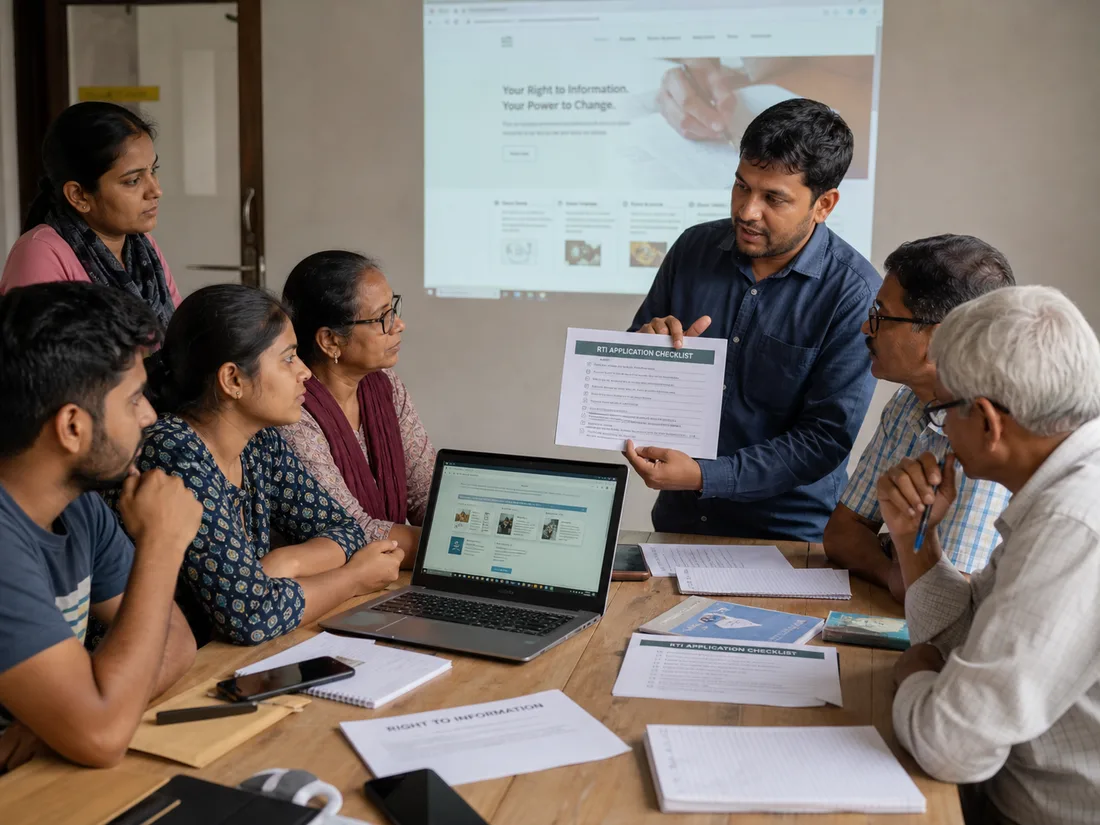
How RTI Wiki Converts Confusion Into Action
Use a direct article or tool for your issue: PMAY, Aadhaar, passport, police, municipal, bank, insurance or court records.
Collect screenshots, receipts, application IDs, replies, dates and office names before drafting anything.
Use templates to request status sheets, action-taken reports, orders, file notes and payment records.
If the answer is delayed or incomplete, convert the timeline into a first appeal with clear relief.
Lead Magnet
One short email path for people who want to use RTI, grievance channels and public-service records without getting lost.