Sunday Special · Practical Guides
RTI Inspection: Can You Take an Assistant, Lawyer, Friend or Expert With You?
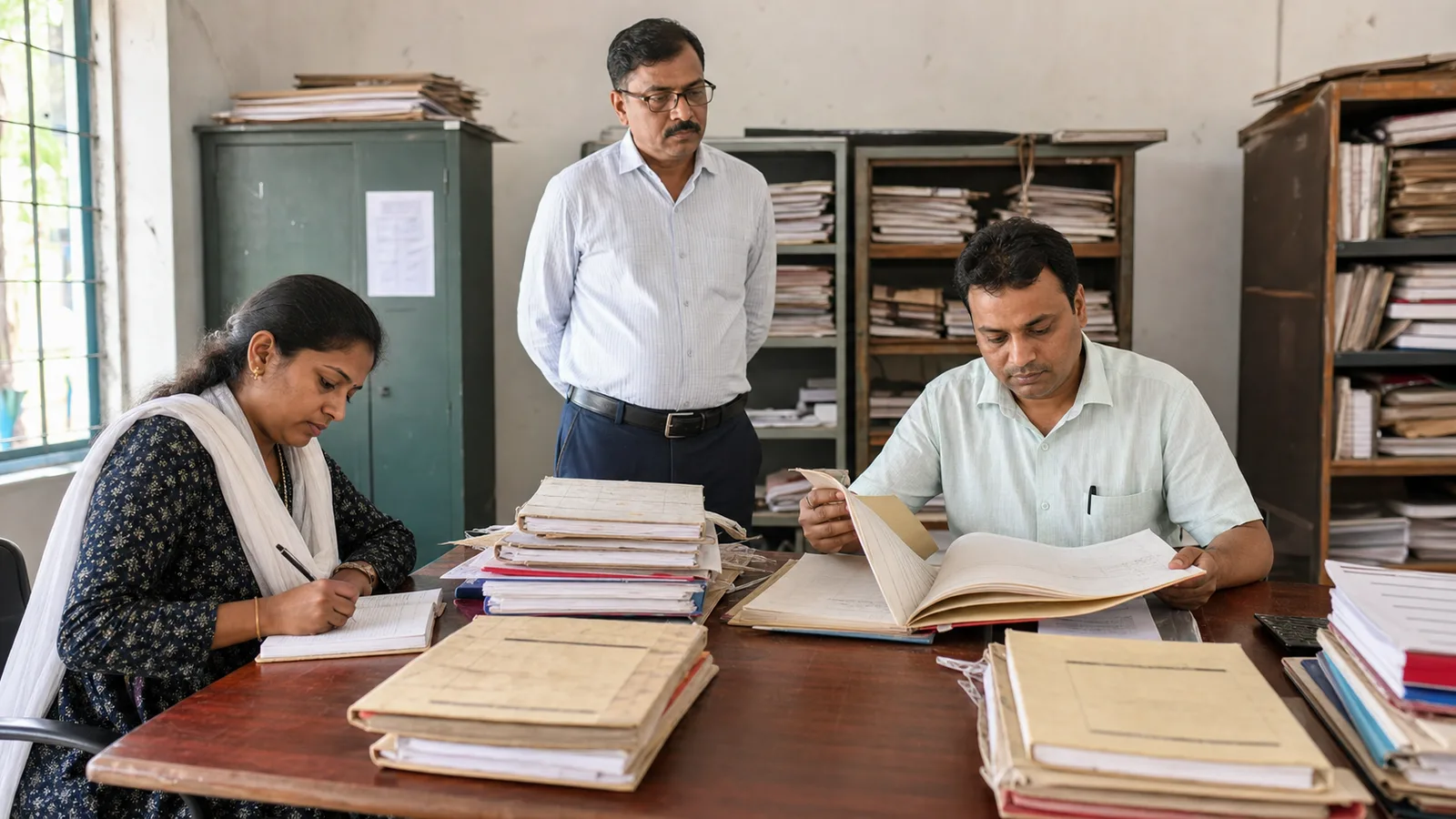
Yes, an RTI applicant may request reasonable help during inspection, especially for old, bulky, technical or inaccessible records. Ask in writing, identify the assistant, carry ID proof and follow office discipline. The right is practical and regulated, not a licence to bring a crowd.
Short answer
An RTI applicant can ask to take an assistant, lawyer, friend, family member, scribe or technical expert for record inspection when help is genuinely needed. The RTI Act clearly gives the applicant a right to inspect records and take notes, extracts or certified copies. It does not expressly say that every applicant may bring unlimited companions. The practical position is: request permission in writing, name the assistant, carry identity proof and accept reasonable limits for space, security, privacy and record safety.
Why this matters on a Sunday
Many RTI inspections fail because the applicant reaches the office alone and then discovers a file full of old handwriting, engineering drawings, maps, accounts or mixed personal records. Sunday is a good day to prepare: decide whether you need help, draft the request, prepare an authorisation letter, and make a checklist of what the assistant will do.
The goal is not to crowd the office or argue with staff. The goal is to inspect records efficiently, protect original files, and select the exact pages for certified copies.
What the RTI Act clearly gives you
Section 2(j)(i) of the RTI Act, 2005 includes the right to inspection of work, documents and records. Section 2(j)(ii) includes taking notes, extracts or certified copies. Section 6(1) lets a citizen make the application, and Section 7(1) requires a decision generally within 30 days. Inspection fees are governed by RTI fee rules. Under the central rules, the first hour of inspection is generally free and later time can attract inspection fee, but state rules may differ.
These provisions are strong enough to ask for a meaningful inspection, not a token appointment where the file is too complex to understand.
What the Act does not expressly say
The Act does not contain a detailed rule saying how many people can accompany an applicant, whether a lawyer must always be allowed, or whether a technical expert can sit with the applicant in every office. That silence cuts both ways. A PIO should not reject genuine assistance mechanically, but an applicant also cannot treat inspection as an unrestricted group visit.
Where relying on a decision, verify citation before publication. For practical use, rely first on the statute, written request, reasonableness and office discipline.
When an assistant is reasonable
- Old records: revenue files, old registers and faded notings may need someone experienced in local terms.
- Voluminous files: tender, municipal, service or land files can run into hundreds of pages.
- Technical drawings: building plans, road alignment maps and layouts may need an engineer or architect.
- Maps: cadastral maps, village maps and survey sketches may need local or technical help.
- Accounts: payment ledgers, utilisation certificates and audit files may need an accountant.
- Disability, old age or illness: a reader, scribe, caregiver or family member may be necessary.
- Language difficulty: records may be in Hindi, English, Urdu, Marathi, Tamil, Telugu or a local revenue script.
- Lawyer or expert help: useful where the file relates to notices, hearings, acquisition, disciplinary proceedings or building violations.
Who can accompany you?
| Person | When it helps | What to prepare |
|---|---|---|
| Family member | Old age, illness, language support, emotional support. | Name, ID proof and short authorisation. |
| Friend | Note-taking, organising pages and logistics. | Written request explaining the limited role. |
| Lawyer | Complex notices, disciplinary files, acquisition or court-linked records. | Authorisation and assurance that inspection will remain orderly. |
| Engineer, accountant or technical expert | Plans, estimates, maps, measurements, bills and accounts. | State the technical reason and limit the request to one expert. |
| Scribe, reader or caregiver | Disability, age, vision difficulty, illness or inability to write. | Clear request for reasonable assistance and ID proof. |
What the PIO can reasonably insist on
- Prior written request naming the assistant and explaining the purpose.
- Identity proof of the applicant and assistant.
- Authorisation letter if the assistant will take notes or speak on behalf of the applicant.
- Limited number of persons, usually one assistant unless special reasons exist.
- Supervised inspection in a record room or designated table.
- No tampering, marking, folding, rearranging or removal of original records.
- Privacy masking or segregation where the file contains third-party personal information, fiduciary material or exempt portions under Section 8.
- Reasonable time slots so office work and record safety are not disrupted.
What the PIO should not do
- Deny inspection only because the applicant is elderly, disabled, illiterate or needs help.
- Reject an assistant request without considering the reason.
- Deny certified copies of identifiable public records without citing a lawful exemption.
- Impose arbitrary conditions, such as insisting that only advocates are allowed or that no note-taking is allowed at all.
- Use privacy as a blanket excuse where masking or severance can protect exempt portions.
Sample request: permission to bring assistant
Inspection-day checklist
- Carry the RTI application, PIO inspection letter, assistant permission request and authorisation letter.
- Carry ID proof for both applicant and assistant.
- Reach on time and ask which file or register is being shown.
- Make a page list for certified copies: file name, page number, date and description.
- Do not argue over legal conclusions during inspection. Ask for records and copies.
- If inspection is incomplete, request a written continuation date.
- If access is denied, politely ask for the reason in writing for first appeal use.
Privacy and mixed records
Many files contain public records mixed with personal, fiduciary or third-party material. Section 8 exemptions, especially privacy and fiduciary concerns, can become relevant. A balanced PIO can mask unrelated personal details while allowing inspection of sanction orders, public notices, file movement, inspection reports, public expenditure records or other non-exempt parts. Ask for severance or masking instead of fighting over the whole file.
FAQs
Can I take a lawyer to RTI inspection?
You can request permission in writing and explain why legal assistance is needed. The PIO may regulate entry, identity, number of persons and conduct, but should not deny inspection arbitrarily merely because you need help.
Is an assistant an automatic right under the RTI Act?
The Act expressly gives the applicant the right to inspect records and take notes, extracts or certified copies. It does not expressly create an unlimited right to bring any number of people. The practical route is to request reasonable assistance in advance.
Can the PIO ask for the assistant's identity proof?
Yes, identity proof and an authorisation letter are reasonable where another person will sit in a record room or inspect files. The office can maintain security and record safety.
What if I am disabled, elderly or unable to read the records alone?
State this clearly in the request. A scribe, reader, caregiver, family member or assistant is often a reasonable accommodation, subject to office discipline and privacy safeguards.
Can the assistant take photographs?
Only if the applicable rules and the PIO permit it. Otherwise mark pages and ask for certified copies under Section 2(j)(ii). Do not photograph restricted personal information or records masked for privacy.
Next step
Turn your facts into a precise RTI using the RTI Assistant, or start with a copy-paste format from RTI Wiki templates. Keep the request narrow and record-based.