Table of Contents
WhatsApp SIM-Binding Rule 2026: Account at Risk?
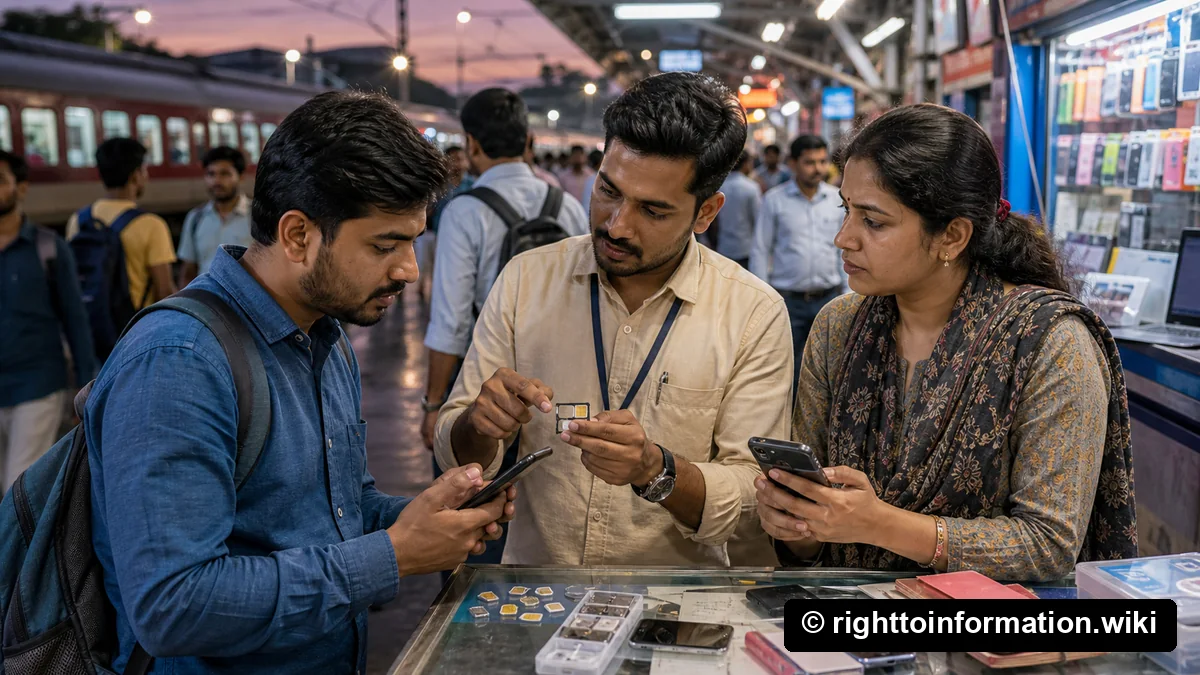
Quick Reply: WhatsApp, Telegram SIM-binding rule explained: will your account stop if you change SIM, use dual SIM or travel abroad? Deadline now pushed to Dec 2026.
No. As of July 2026 your WhatsApp will not stop working because of the SIM-binding rule. The Department of Telecommunications (DoT) directive exists, but enforcement is phased and the compliance deadline has reportedly been pushed to 31 December 2026, so nothing is being cut off right now. Read on for what changes and what stays the same.
Short on time? Jump to the comparison table below, then the “Will you be affected?” bullets for your exact case.
Anjali, a dual-SIM user in Pune, read a forwarded message saying her WhatsApp would be deleted if she swapped SIMs. She panicked. The truth is simpler. The rule asks apps to keep your account tied to a SIM that is active in your phone. It does not ban dual SIM, e-SIM, or roaming, and it is not live as a hard cut-off today. So Anjali changed her SIM the same week and nothing happened.
What actually changes vs what stays the same
This is the lead block. The table below maps the common situations to what they look like today versus what they may look like once the SIM-binding rule is fully enforced.
| Situation | Before / today | Under the SIM-binding rule (when enforced) |
|---|---|---|
| Your account identity | Tied to your phone number | Still tied to your number, but the linked SIM should be active in a device |
| Logging in on a new phone | OTP to your number | Same OTP login; account should sense an active linked SIM |
| WhatsApp Web / Desktop | Stays logged in for long periods | May ask you to re-scan the QR code more often, based on risk checks |
| Account on a number whose SIM you stopped using | Often keeps working for a while | More likely to need re-verification with an active SIM |
| Misuse via stolen, recycled or foreign SIM | Harder for apps to detect | Targeted: the rule aims to block exactly this |
The core idea: your messaging account should match a SIM that is actually live in a phone. The goal is to curb hijacked, recycled and foreign-SIM fraud, not to inconvenience ordinary users.
Will you be affected?
Quick read for the most common cases.
- You changed your SIM (same number, new card): No problem. Your number is the same, so your account stays. A new physical SIM for the same number does not break anything.
- You ported to a new operator (same number): Fine. Mobile number portability keeps your number, and your account follows the number.
- You use dual SIM: Should be fine. The rule targets your registered SIM being active, not how many SIMs you carry. Your WhatsApp number just needs an active SIM in the device.
- You use an e-SIM: Should be fine. An e-SIM is an active SIM in the device, so it should work the same way as a physical SIM.
- You travel abroad and use a foreign SIM or roaming: Your account does not vanish. You may face extra verification if your registered SIM is not active. Keep your Indian SIM reachable, or use roaming, when you set things up.
- You changed your number entirely: Use WhatsApp's in-app “Change Number” feature before you stop using the old SIM. This is good practice with or without this rule.
- You rely on WhatsApp Web or Desktop: This is the part most likely to change. Early reports mentioned logging web users out roughly every 6 hours. That fixed timer was later reported to be dropped in favour of a “risk-based” approach, so routine users may simply re-scan the QR code now and then.
What to do now
You do not need to do anything urgent today. These steps keep you safe whenever the rule does take effect.
- Keep your registered SIM active. Make sure the number linked to WhatsApp or Telegram has a live SIM in a phone you control.
- If you are changing numbers, migrate first. Open WhatsApp, go to Settings, Account, Change Number, and complete the switch before the old SIM dies.
- Note your QR habit. If you use WhatsApp Web a lot, expect to re-scan the QR code more often. Keep your phone handy.
- Do not act on “your account will be deleted” forwards. Those messages are usually scams. Verify against official app help pages.
- Guard your old number. If you give up a number, your recycled SIM can expose old accounts. See the risks of recycled mobile numbers and old accounts.
- If spam or fraud calls follow a SIM change, complain. You can register a TRAI DND complaint to stop spam calls and SMS.
Who issued this and under what power
The directive was issued by the Department of Telecommunications (DoT), the central body that regulates telecom and licensing in India, reportedly on 28 November 2025. It was sent to messaging platforms including WhatsApp, Telegram, Signal, Snapchat and Arattai, among others.
The platforms were first given about 90 days to comply, which placed the original deadline near the end of February 2026. That window was not met. After industry representation, the rollout was set up in phases, with Android expected to comply first and Apple iOS facing technical constraints. Reports indicate the deadline was extended toward 31 December 2026. Treat the rule as issued but not yet fully enforced, and check official app notices for the live status.
Telecom and consumer grievances have formal channels. If a telecom or DND issue is not resolved, you can file a TRAI telecom complaint. For background reading on citizen rights and process, see The RTI Playbook.
FAQ
Will my WhatsApp stop working if I change my SIM?
No, not if your phone number stays the same. Swapping to a new physical SIM, or porting to a new operator while keeping your number, does not delete your account. The SIM-binding rule links your account to your number with an active SIM, not to one specific SIM card.
Does the rule ban dual SIM phones?
No. Dual SIM use is allowed. The directive only expects the number registered with your messaging app to have an active SIM present in a device. You can keep a second SIM for calls or data without any effect on your account.
Can I still use an e-SIM with WhatsApp under this rule?
It should work. An e-SIM is an active SIM in your device, so it should be treated the same way as a physical SIM. As long as your registered number is live in the phone, your account should continue to work normally.
Will WhatsApp stop working when I travel abroad?
Your account does not vanish abroad. If your registered Indian SIM is not active, you may face extra verification at some point once the rule is enforced. To stay safe, keep your Indian SIM reachable or active on roaming when you set up or re-verify your account.
Is the SIM-binding rule in force right now?
Not as a hard cut-off. As of July 2026 the directive is issued but enforcement is phased and the deadline has reportedly been extended to 31 December 2026. No accounts are being cut off solely due to this rule today. Check your app's official notices for the current position.
Do I have to re-login to WhatsApp Web every 6 hours?
Early reports described logging web users out about every 6 hours. That fixed timer was later reported to be replaced by a “risk-based” approach. In practice, ordinary users may just need to re-scan the QR code occasionally rather than on a strict 6-hour clock.
Why did the government bring in this rule?
The stated goal is to curb misuse through stolen, recycled or foreign SIMs and OTP-based account hijacking. By tying an account to an active SIM, the DoT aims to make it harder for fraudsters, including those operating from outside India, to abuse messaging accounts.
What happens to my account if I give up my old number?
If you stop using a number and the SIM is later recycled to a new owner, your old linked accounts can be at risk. Migrate your account to your new number first, then surrender the old SIM. Recycled numbers are a known security gap worth handling carefully.
Should I trust messages saying my account will be deleted on a deadline?
No. Treat “your WhatsApp will be deleted on [date]” forwards as likely scams. The rule does not delete ordinary users' accounts. Verify any claim against the official app help pages or trusted news, not a forwarded chat message.
Sources
- MediaNama, “Govt Issues SIM Binding Directions To WhatsApp and Telegram” (28 November 2025): https://www.medianama.com/2025/11/223-dot-sim-binding-directions-to-whatsapp-and-telegram/
- MediaNama, “Govt Extends SIM Binding Deadline to December 2026” (April 2026): https://www.medianama.com/2026/04/223-dot-sim-binding-deadline-extended-dec-2026/
- Business Standard, “DoT may push SIM binding deadline for WhatsApp, Telegram and more: Report” (30 March 2026): https://www.business-standard.com/technology/tech-news/dot-may-push-sim-binding-deadline-for-whatsapp-telegram-and-more-report-126033000510_1.html
- News9live, “DoT pushes SIM Binding deadline to December, no 6 hour WhatsApp web logout now”: https://www.news9live.com/technology/tech-news/dot-sim-binding-deadline-december-no-6-hour-logout-2950992
- MediaNama, “Arattai to Implement SIM Binding, but has no Timeline” (March 2026): https://www.medianama.com/2026/03/223-arattai-sim-binding-dot-rules-no-timeline/