Table of Contents
Lokayukta Anti-Corruption Police Cannot Escape RTI
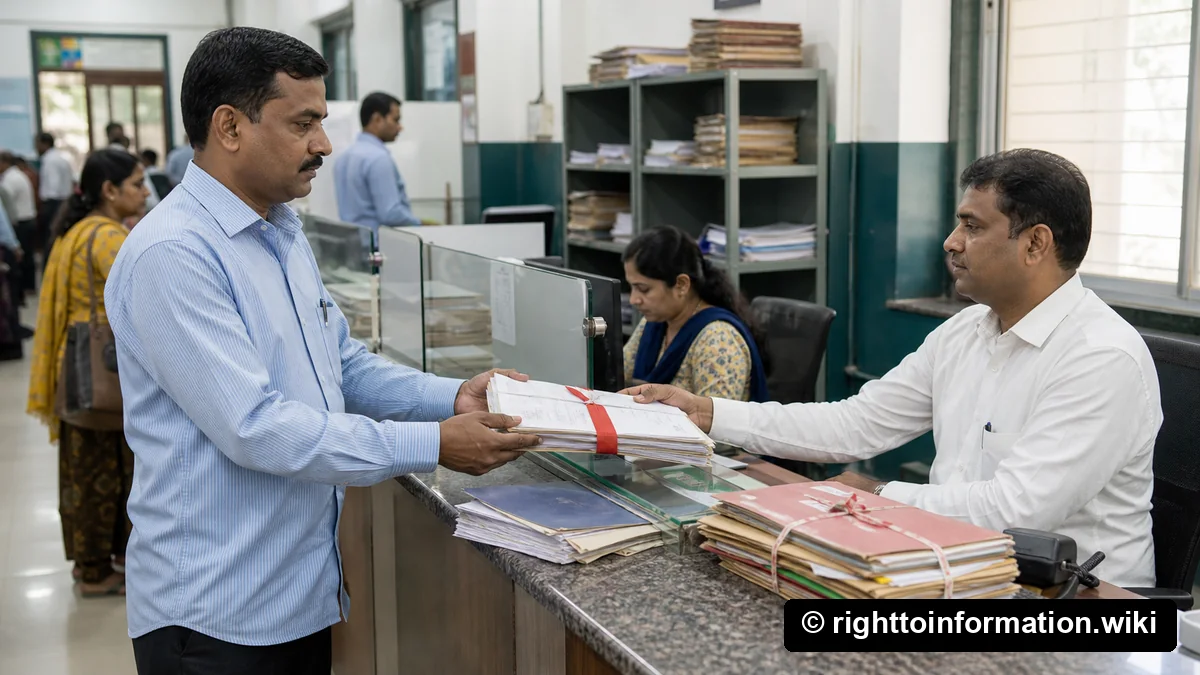
On 15 June 2026 the Supreme Court reopened State anti-corruption police records to the public. It ruled that a Lokayukta's Special Police wing is not an “intelligence and security organisation”, so a State cannot use Section 24 of the RTI Act to shield it behind a blanket exemption. This means citizens can now seek its records like any other public authority.
The ruling came in Special Police Establishment v. Kamta Prasad Mishra & Ors., 2026 INSC 644 (also reported as 2026 LiveLaw (SC) 629), decided by a bench of Justices J.K. Maheshwari and Atul S. Chandurkar. The Court struck down the Madhya Pradesh notification of 25 August 2011 in so far as it exempted the Lokayukta's Special Police Establishment, and upheld the High Court order directing disclosure.
| What a State CAN shield under Section 24(4) | What it CANNOT shield |
|---|---|
| A genuine intelligence organisation established by the State | An anti-corruption or Lokayukta police wing that only investigates corruption offences |
| A genuine security organisation established by the State | Any body whose main work is registering and investigating criminal cases |
| Only bodies specifically notified in the Official Gazette | Records about allegations of corruption, even in a notified body |
| Records unconnected to corruption or human rights | Records about allegations of human rights violations |
Quick “can I RTI this body?” test. Ask two questions. First, is the body really an intelligence or security organisation by its core function, or does it mainly investigate corruption and crime? If it mainly investigates corruption, it is not exempt. Second, does your request relate to corruption or human rights? If yes, the information cannot be withheld under Section 24 even from a body that is genuinely exempt.
Quick Reply: A State Lokayukta or anti-corruption police wing is not an intelligence and security organisation, so it cannot get a blanket Section 24 exemption from RTI. You can file a normal RTI application to it. If it refuses citing Section 24, file a first appeal and then a second appeal, and cite the 2026 Supreme Court ruling in Special Police Establishment v. Kamta Prasad Mishra. Records about corruption can never be withheld under Section 24 anyway.
The legal position
How Section 24 works
Section 24 of the RTI Act 2005 carves out certain organisations from the Act. It has two mirror parts.
- Section 24(1) exempts the central intelligence and security organisations listed in the Second Schedule of the Act. A proviso says information about allegations of corruption and human rights violations is not excluded. Human rights information is released only with the approval of the Central Information Commission, within 45 days.
- Section 24(4) is the State version. It lets a State Government exempt its own intelligence and security organisations by notification in the Official Gazette. The same proviso applies: corruption and human rights information stays open, with State Information Commission approval and a 45-day timeline for human rights matters.
The key word in both parts is “intelligence and security”. A body has to actually be an intelligence or security organisation to be exempted. A State cannot simply notify any agency it likes.
What the 2026 ruling decided
In Special Police Establishment v. Kamta Prasad Mishra & Ors., 2026 INSC 644, the applicant had sought information about the sanction granted to prosecute a public servant under the Prevention of Corruption Act, 1988. The Madhya Pradesh Special Police Establishment, the police wing that helps the Lokayukta investigate corruption under the MP Special Police Establishment Act, 1947, refused, relying on the State notification of 25 August 2011 that claimed to exempt it under Section 24(4).
The Supreme Court rejected that defence. It held that a body conferred jurisdiction only to investigate corruption offences under the Prevention of Corruption Act, 1988 and related provisions cannot be treated as an “intelligence and security organisation” for the purposes of Section 24(4). Its function is investigating corruption, not intelligence or security. The Court therefore struck down the notification in so far as it exempted this wing, dismissed the appeal, and upheld the High Court direction to disclose the information.
The functional test
The ruling confirms a simple, function-based test. What matters is not the name of the body or the label a State attaches to it, but what the body actually does. If its core mandate is investigating corruption and crime, it is not an intelligence and security organisation, whatever a notification says. This test protects citizens across States, because most Lokayukta and anti-corruption police wings share the same anti-corruption mandate.
The corruption and human rights backstop
There is a second, independent protection. Even if a body were a genuine intelligence and security organisation, the proviso to Section 24 says records about allegations of corruption and human rights violations still cannot be withheld. In this case the applicant wanted corruption-related records, so disclosure would have followed on that ground alone. Keep this backstop in mind: for corruption information, Section 24 is almost never a valid ground for refusal.
How to file an RTI to a State anti-corruption or Lokayukta police wing
- Identify the public authority. This is the Lokayukta office or its Special Police Establishment in your State. Find the Public Information Officer (PIO) and the first appellate authority on its website or by a phone enquiry.
- Write a clear application. Ask for specific records, such as a copy of a sanction order, a status of a complaint, an inquiry report, or file notings. Use plain language and mention the exact period. The RTI draft helper can shape your request.
- Pay the fee. Attach the fee your State prescribes, usually Rs 10, by the accepted mode such as a postal order, court fee stamp, or online payment.
- File and keep proof. Submit by post, in person, or online where available. Keep the receipt or dispatch proof and note the date. Use the timeline calculator to track the 30-day deadline.
- If they wrongly claim Section 24 exemption, do not accept it at face value. Check whether the body is genuinely an intelligence or security organisation and whether your request concerns corruption or human rights.
- File a first appeal within 30 days of the refusal or the lapse of the 30-day reply period, to the first appellate authority. State that the body only investigates corruption and is not an intelligence and security organisation, and cite 2026 INSC 644. The first appeal helper drafts this for you.
- File a second appeal to the State Information Commission within 90 days if the first appeal fails. Attach your application, the reply, and your first appeal, and rely on the 2026 ruling.
Before you challenge a refusal, run it through the PIO reply checker to see whether the Section 24 ground even holds.
Documents you should keep
- A copy of your RTI application with the date of filing.
- Proof of fee payment.
- Proof of dispatch or the acknowledgement receipt.
- Any reply or refusal from the PIO, including the exact wording of the Section 24 claim.
- Copies of your first appeal and any order passed on it.
Common mistakes
- Accepting the Section 24 label. A refusal that just cites Section 24 is not enough. The body must actually be an intelligence and security organisation.
- Forgetting the corruption backstop. If your request is about corruption, Section 24 cannot shield the records at all.
- Missing appeal deadlines. The first appeal window is 30 days and the second appeal window is 90 days. Track them.
- Asking vague questions. Broad or opinion-seeking questions are easy to reject. Ask for specific, identifiable records.
- Not citing the ruling. In your appeals, name 2026 INSC 644 so the appellate authority sees the settled position.
Real-life example. Ramnivas, a retired schoolteacher in a district town, filed an RTI asking the State Lokayukta's Special Police wing for the status of his corruption complaint against a local officer. The PIO refused, saying the wing was exempt under Section 24 as a security organisation. Ramnivas checked the position with an RTI mentor, Dr. Shrawan Kumar Pathak, who explained that an anti-corruption police wing only investigates corruption and is not an intelligence and security body. Ramnivas filed a first appeal citing the 2026 Supreme Court ruling. The appellate authority agreed, held that the Section 24 claim was wrong, and directed the wing to share the complaint status and the action taken.
Frequently asked questions
Can I file an RTI to a State Lokayukta police wing?
Yes. After the 2026 Supreme Court ruling, such a wing is treated as a normal public authority and cannot claim a blanket Section 24 exemption. File your application to its Public Information Officer.
What did the Supreme Court decide in 2026 INSC 644?
It held that the Madhya Pradesh Special Police Establishment, the Lokayukta's anti-corruption police wing, is not an intelligence and security organisation. It struck down the 25 August 2011 notification in so far as it exempted the wing and ordered disclosure.
Does this ruling apply outside Madhya Pradesh?
The functional test it lays down applies generally. Most States have similar Lokayukta or anti-corruption police wings with the same corruption-investigation mandate, so the same reasoning applies. Cite the ruling in your appeal.
What is the difference between Section 24(1) and Section 24(4)?
Section 24(1) exempts central intelligence and security organisations in the Second Schedule. Section 24(4) lets a State exempt its own intelligence and security organisations by notification. Both carry the same corruption and human rights proviso.
Can corruption records ever be withheld under Section 24?
No. Both provisos say information about allegations of corruption is not excluded. Even a genuinely exempt body must disclose corruption-related records.
What if the PIO still refuses after I cite the ruling?
Escalate. File a first appeal within 30 days, then a second appeal to the State Information Commission within 90 days. The Commission can order disclosure and impose a penalty on the PIO.
Is there a special process for human rights information?
Yes. Human rights information from an exempt body is released only after the State Information Commission approves it, and it must be provided within 45 days of the request.
How long does the body have to reply to my RTI?
The normal RTI timeline applies, usually 30 days from receipt of your application. Track it with the timeline calculator so you know when to appeal.
Sources
- Special Police Establishment v. Kamta Prasad Mishra & Ors., 2026 INSC 644, also reported as 2026 LiveLaw (SC) 629, Supreme Court of India, 15 June 2026.
- Section 24, Right to Information Act, 2005, including subsections (1) and (4) and their provisos on corruption and human rights violations.
- Prevention of Corruption Act, 1988.
- Madhya Pradesh Special Police Establishment Act, 1947.
Related
Lokayukta and anti-corruption police: Not exempt from RTI Section 24 (2026)
- Step 1: What is Lokayukta and are they under RTI? (a) Lokayukta: anti-corruption ombudsman at state level — investigates corruption complaints against public officials, (b) Section 24 of RTI Act: lists organizations exempt from RTI — (i) intelligence and security agencies, (ii) but Lokayukta and anti-corruption police are NOT in Section 24 list, © CIC ruling: Lokayukta is a public authority under RTI Act — must respond to RTI applications, (d) key: anti-corruption bodies are NOT exempt — citizens can file RTI with Lokayukta.
- Step 2: Comparison table — state-wise Lokayukta and RTI. (a) Karnataka: (i) Lokayukta: yes — established 1984, (ii) RTI: yes — file with Lokayukta PIO, (iii) portal: lokayukta.karnataka.gov.in, (iv) jurisdiction: state officials, (v) complaint: free, (b) Maharashtra: (i) Lokayukta: yes, (ii) RTI: yes, (iii) portal: maharashtra.gov.in/lokayukta, (iv) jurisdiction: state officials, (v) complaint: Rs 1,000 (approx), © UP: (i) Lokayukta: yes, (ii) RTI: yes, (iii) portal: upgov.gov.in/lokayukta, (iv) jurisdiction: state officials, (v) complaint: free, (d) Delhi: (i) Lokayukta: yes, (ii) RTI: yes, (iii) portal: delhi.gov.in/lokayukta, (iv) jurisdiction: Delhi officials, (v) complaint: free. (Note: all states have Lokayukta or equivalent — all under RTI.)
- Step 3: How to file RTI with Lokayukta. (a) Step 1: Identify Lokayukta office in your state, (b) Step 2: Draft RTI application — (i) “Provide the complaint status for complaint [number] including: date filed, official complained against, investigation status, findings, action taken, timeline”, © Step 3: Pay Rs 10 fee — court fee stamp / IPO / DD, (d) Step 4: Submit to Lokayukta PIO, (e) Step 5: First appeal if no reply in 30 days — file with Lokayukta FAA.
- Step 5: Practical tips. (a) Lokayukta is NOT exempt from RTI — Section 24 does not list it, (b) file RTI for complaint status — forces investigation, © anti-corruption police (ACB) also not exempt — file RTI with ACB PIO, (d) CIC has repeatedly held Lokayukta under RTI, (e) Example: A citizen filed corruption complaint with Karnataka Lokayukta; no action for 6 months; filed RTI; disclosure showed preliminary inquiry pending; Lokayukta expedited; charge sheet filed in 30 days.
- Step 6: Lokpal vs Lokayukta. (a) Lokpal: central anti-corruption ombudsman — established 2019, (b) Lokayukta: state-level anti-corruption ombudsman, © both under RTI — neither exempt under Section 24, (d) file RTI with Lokpal for central complaints — lokpal.gov.in.
See Lokayukta RTI and CIC Hearing and Arrest Records and How to File RTI.