Table of Contents
Kalpasar project in Gujarat: why it matters
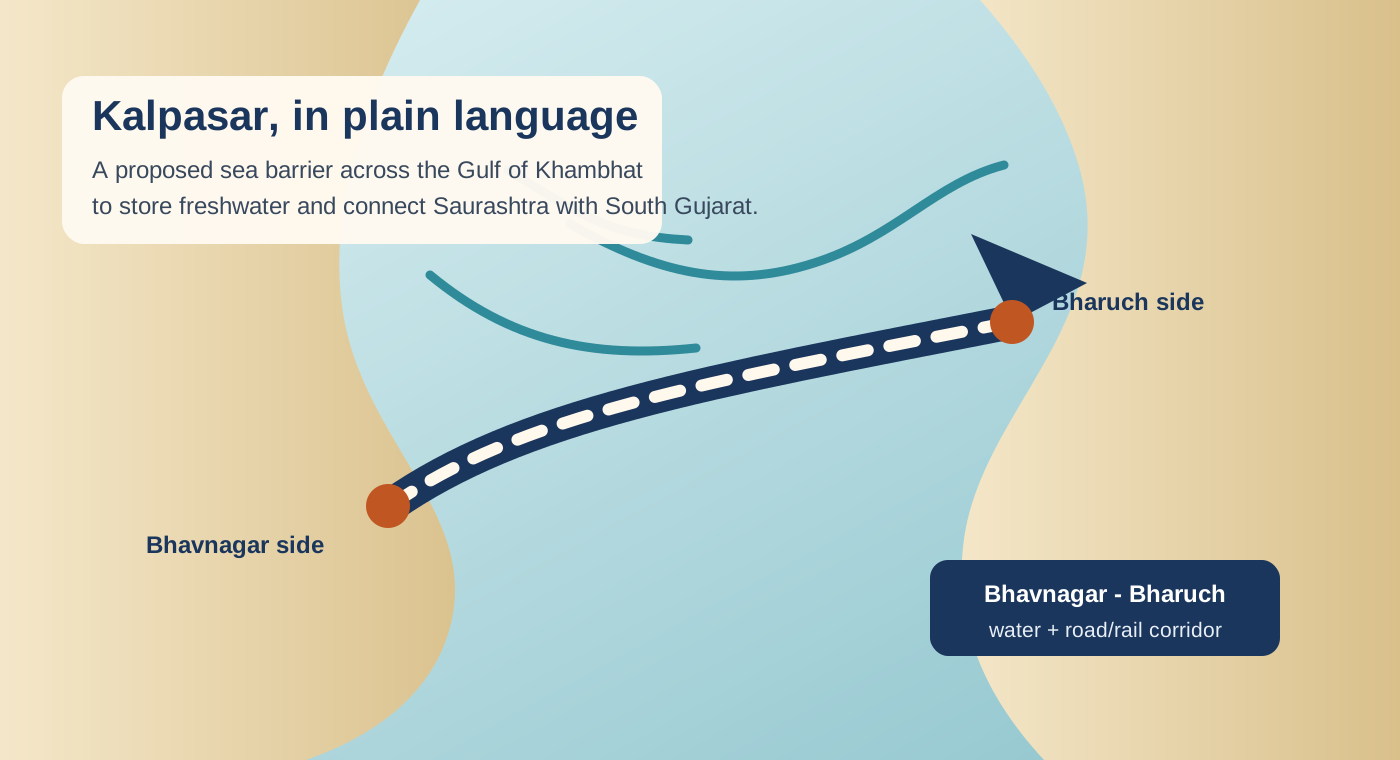
Quick Reply: Plain-language explainer on Gujarat's Kalpasar project: Gulf of Khambhat sea barrier, freshwater reservoir, benefits, risks, Dutch cooperation, and key facts.
Quick answer. Kalpasar is Gujarat's long-discussed plan to build a large sea barrier across the Gulf of Khambhat and turn part of the gulf into a managed freshwater reservoir. If it works, it could store river water that now flows into the sea, support drinking water and irrigation, create a major Bhavnagar-Bharuch transport corridor, and strengthen industrial growth around South Gujarat, Saurashtra, and Dholera. It is a game-changing idea, but it is still a proposed mega-project that must clear difficult engineering, environmental, financial, and salinity questions.
If you are short on time, read the “why it could be a game changer” section and the “what is confirmed so far” table.
Know Your Government
This is the first article in RTI Wiki's Know Your Government series. The series explains major public projects in common language so citizens can understand government beyond slogans, press releases, and technical files.
This article has no RTI filing angle. It is a public-interest explainer.
What is Kalpasar?
Kalpasar is also called the Gulf of Khambhat Development Project. The idea is simple to say and extremely difficult to build: close part of the Gulf of Khambhat with a long dyke or sea barrier, let river water collect on the upstream side, and use that stored freshwater for homes, farms, and industry.
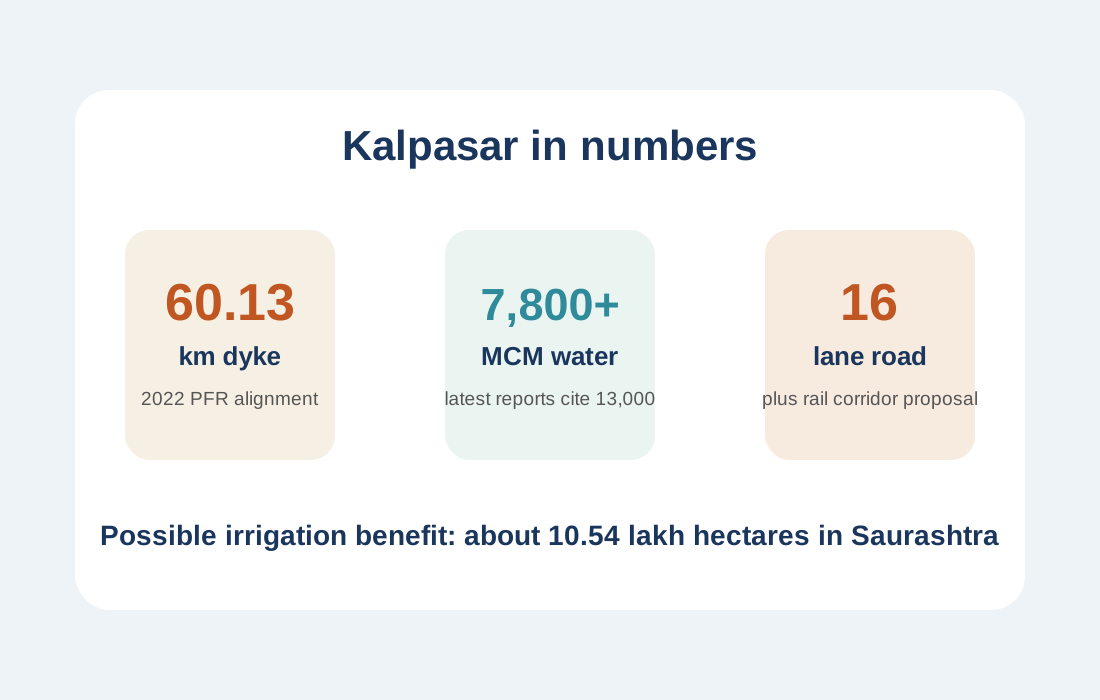
The Government of Gujarat's 2022 pre-feasibility material describes a 60.13 km dyke across and along the Gulf of Khambhat alignment. About 26.7 km of that length is in the sea portion, with the remaining length extending on the Bhavnagar and Bharuch flanks. The same document lists a 7,800 million cubic metre freshwater reservoir, a 150 m wide road/rail corridor, a 16-lane road, rail provision, and a flood regulator. Government of Gujarat pre-feasibility report, 2022
Recent 2026 reporting and state-government statements cite a larger current vision: a roughly 60 km dam and a 13,000 million cubic metre reservoir. The numbers differ because Kalpasar has gone through multiple technical versions over many years. Deccan Herald, 17 May 2026, Times of India, 4 April 2026
The idea in one picture
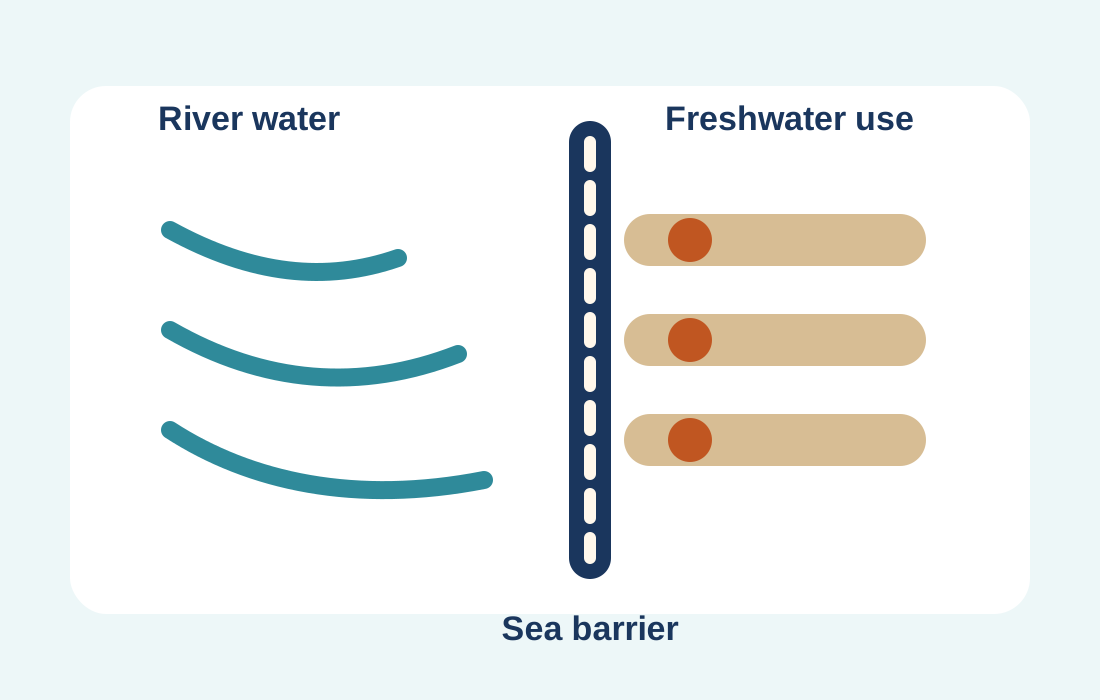
1. Capture water before it disappears into the sea
Rivers such as Sabarmati, Mahi, Dhadhar and other Saurashtra rivers drain towards the Gulf of Khambhat. The project tries to store part of that flow.
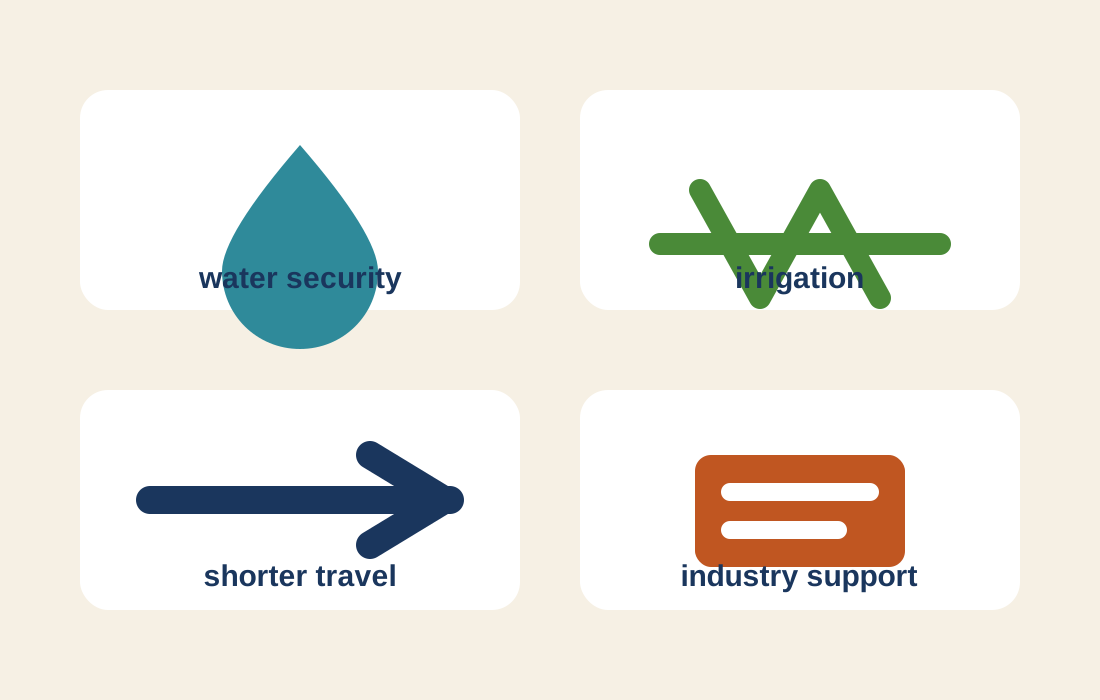
2. Use one project for many public needs
The proposal combines water storage, irrigation, drinking water, transport, industry support, and possible renewable-energy links.
3. Think in decades, not months
Kalpasar is not a small dam. It is a coastal-engineering project with water, transport, environment, finance, and regional-planning layers.
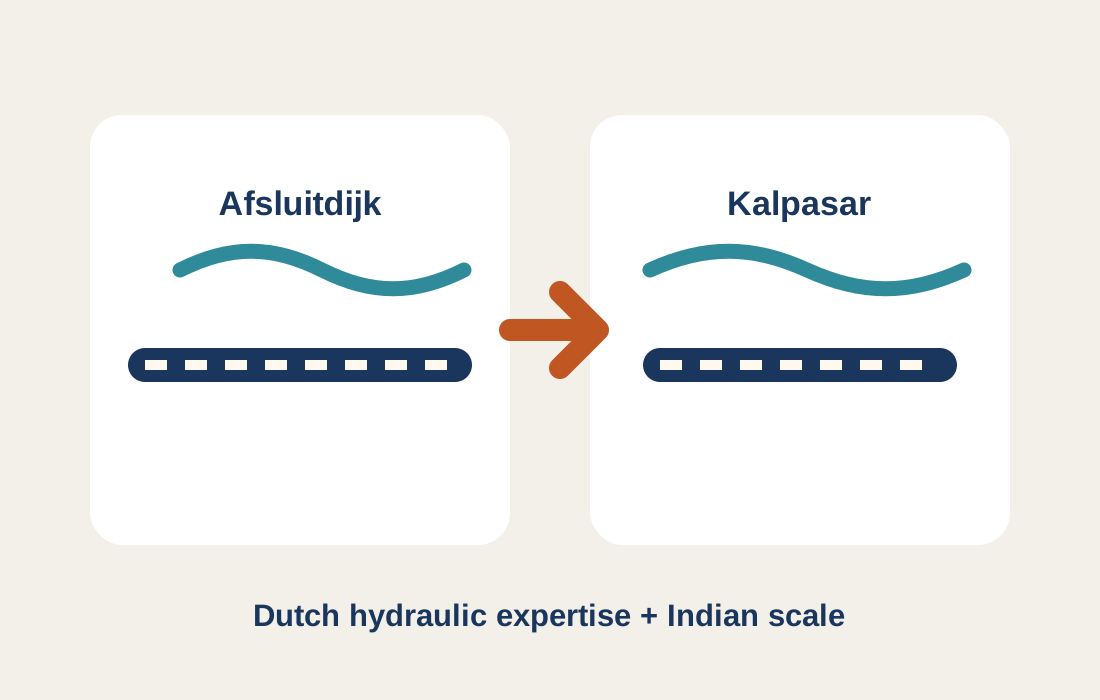
4. Why the Netherlands matters
The Dutch have built major sea barriers and freshwater systems. India and the Netherlands have now agreed to technical cooperation on Kalpasar.
What is confirmed so far?
| Fact | Plain-language meaning |
| — | — |
| Location | Gulf of Khambhat, between the Saurashtra side and the Bharuch/South Gujarat side. |
| Core structure | A long dyke or sea barrier to create a freshwater reservoir. |
| 2022 project version | 60.13 km dyke, 7,800 MCM reservoir, road/rail corridor, flood regulator. |
| 2026 public statements | Reports cite a 60 km dam and 13,000 MCM freshwater reservoir. |
| Recent international step | India and the Netherlands welcomed a Letter of Intent for technical cooperation on Kalpasar in May 2026. |
| Status | Proposed mega-project under technical, environmental, financial, and implementation review. |
Why it could be a game changer
1. Gujarat gets a new water-storage idea
Many parts of Saurashtra face recurring water stress. The 2022 pre-feasibility report says the project is intended to support drinking water, agriculture, groundwater improvement, and climate-change adaptation.
The report also says about 10.54 lakh hectares in 37 talukas of 9 Saurashtra districts could benefit from irrigation planning, and that more than 60 existing dams could be permanently filled with freshwater. Those are planning claims, not completed outcomes, but they show the scale of the ambition.
In simple terms: Kalpasar tries to treat the Gulf not only as coastline, but as a possible water bank.
2. It could shorten Saurashtra-South Gujarat travel
Today, moving between parts of Saurashtra and South Gujarat can require a long inland route. The project proposes a road and rail corridor on or along the dyke.
The 2022 pre-feasibility report says a road over the dyke could cut the Bhavnagar-Bharuch distance by about 136 km. Recent reporting describes a 16-lane highway over the dam. If built, this would not only save time for passengers; it would change freight routes, port access, industrial logistics, and emergency movement.
This is why Kalpasar is not just a water project. It is also a map-changing transport project.
3. It supports the Dholera and semiconductor story
Dholera is being positioned as a major industrial and semiconductor location. Tata Electronics says its Dholera fab is planned as a 300 mm semiconductor facility with capacity up to 50,000 wafers per month. Tata Electronics semiconductor foundry page
Big industrial regions need dependable water, power, ports, roads, and skilled workers. Kalpasar does not “create” Dholera by itself. But a large freshwater and connectivity project near this economic geography could make the region more resilient.
This is the practical link: advanced manufacturing is not only about factories. It is about the invisible backbone behind factories.
4. It could make climate adaptation visible
Climate adaptation often sounds abstract. Kalpasar makes it concrete: store water in wet periods, plan for dry periods, manage salinity, and design infrastructure for a difficult coast.
The India-Netherlands connection is important here. On 17 May 2026, Prime Minister Narendra Modi and Dutch Prime Minister Rob Jetten visited the Afsluitdijk, a 32 km Dutch dam and causeway. The Embassy of India said the visit highlighted parallels with Kalpasar and that the two sides welcomed a Letter of Intent between India's Ministry of Jal Shakti and the Netherlands' Ministry of Infrastructure and Water Management for technical cooperation on Kalpasar. Embassy of India, The Hague, 17 May 2026
That does not mean Kalpasar is solved. It means India is seeking expertise from a country that has spent a century learning how to live with water.
Why it is so difficult
Kalpasar is hard because the Gulf of Khambhat is not a quiet lake. It is a high-energy coastal system.
The 2022 pre-feasibility report notes strong tidal conditions in the gulf. It records that the maximum spring tide at Bhavnagar is 12.5 m, among the highest recorded tidal ranges. The report also discusses tides, currents, waves, sediment, topography, flood regulation, salinity, and ecology.
The hardest questions are:
- Can a freshwater reservoir remain fresh in a marine environment?
- How will sediment and silt behave after the barrier changes water movement?
- What happens to fisheries, ports, mudflats, and coastal ecosystems?
- How will flood water be safely released?
- How much will the final design cost, and who will pay?
- Can the benefits justify the construction, maintenance, and environmental costs?
These questions do not make the project unimportant. They make it serious.
Why citizens should know this project
Most people hear about government projects only at 2 moments: announcement and controversy. That is too late.
Kalpasar is worth understanding now because it combines many themes that citizens should learn to read:
- water security;
- coastal engineering;
- climate adaptation;
- industrial policy;
- transport corridors;
- international technical cooperation;
- environmental appraisal;
- public finance.
If citizens understand this vocabulary, public debate improves. People can ask better questions without reducing everything to blind support or blind opposition.
Common myths and plain answers
Is Kalpasar already under construction?
No. As of 27 May 2026, it should be understood as a proposed mega-project that has received renewed attention because of India-Netherlands technical cooperation. It is not a completed dam and not a finished reservoir.
Will it turn seawater into drinking water?
Not like a desalination plant. The basic idea is to create a barrier so river water can collect on one side and gradually become a freshwater reservoir. Salinity control is one of the hardest technical challenges.
Is this only for Saurashtra?
Saurashtra is central to the water-security argument, but the project also affects South Gujarat, Bharuch, Bhavnagar, Dholera, ports, transport, and industry.
Why is the Netherlands involved?
The Netherlands has deep experience in sea barriers, flood control, land reclamation, and freshwater management. The Afsluitdijk is a reference point because it separates the sea from a freshwater lake while also serving as a causeway.
Does every number about Kalpasar match?
No. Older and newer project versions use different figures. The 2022 pre-feasibility report cites 7,800 MCM reservoir capacity for that version. Recent 2026 statements and reporting cite 13,000 MCM. Citizens should always check which version a number belongs to.
What to watch next
- Whether the India-Netherlands technical cooperation produces a revised feasibility or design framework.
- Whether the detailed project report is publicly released in an accessible format.
- Whether environmental appraisal addresses salinity, sediment, fisheries, ports, and coastal ecology in detail.
- Whether the final project model explains cost, funding, maintenance, and benefit-sharing.
- Whether the water distribution plan clearly shows who receives water and how it reaches higher parts of Saurashtra.
Sources
Related
Last reviewed on
27 May 2026